ETFdb Logo
  • ETF Database
  • Content Hubs
    • Themes
      • Active ETF
      • Alternatives
      • Artificial Intelligence
      • China Insights
      • Core Strategies
      • Crypto
      • Disruptive Technology
      • Energy Infrastructure
      • ETF Building Blocks
      • ETF Investing
      • ETF Strategist
      • Financial Literacy
      • Fixed Income
      • Free Cash Flow
      • Future ETFs
      • Innovative ETFs
      • Institutional Income Strategies
      • Leveraged & Inverse
      • Market Insights
      • Market Outlooks
      • Modern Alpha
      • Nuclear Energy
      • Portfolio Strategies
      • Sector Investing
      • Tax Efficient Income
      • Thematic Investing
    • Asset Class
      • Equity
        • U.S. Equity
        • Int'l Developed
        • Emerging Market Equities
      • Alternatives
        • Gold/Silver/Critical Materials
        • Cryptocurrency
        • Currency
        • Volatility
      • Fixed Income
        • Investment Grade Corporates
        • US Treasuries & TIPS
        • High Yield Corporates
        • Int'l Fixed Income
    • ETF Ecosystem
    • ETFs in Canada
    • Market Outlook
    • Crypto ETF Hub
  • Tools
    • ETF Screener
    • ETF Country Exposure Tool
    • ETF Database Categories
    • Indexes
    • Scenario Analysis
    • Watchlists
    • Head-To-Head ETF Comparison Tool
    • Mutual Fund To ETF Converter
    • ETF Stock Exposure Tool
    • ETF Issuer Fund Flows
  • Research
    • ETF Education
    • Equity Investing
    • Dividend ETFs
    • Leveraged ETFs
    • Inverse ETFs
    • Index Education
    • Index Insights
    • Top ETF Sectors
    • Top ETF Issuers
    • Top ETF Industries
  • Webcasts
  • Sectors
    • Sector Investing Content Hub
    • XLK
    • XLI
    • XLU
    • XLY
    • XLP
    • XLRE
    • Sector Power Rankings
    • XLE
    • XLC
    • XLF
    • XLV
    • XLB
  • Multimedia
    • ETF 360 Video Series
    • ETF of the Week Podcast
    • Gaining Perspective Podcast
    • ETF Prime Podcast
    • Video
  • Company
    • About VettaFi
    • Get VettaFi’ed
  • PRO
    • Pro Content
    • Pro Tools
    • Advanced
    • FAQ
    • Free sign up
    • Login
  1. Modern Alpha Content Hub
  2. WisdomTree’s Incisive Fixed Income Approach
Modern Alpha Content Hub
Share

WisdomTree's Incisive Fixed Income Approach

Tom LydonApr 05, 2021
2021-04-05

Advisors are quickly discovering that traditional fixed income strategies just aren’t cutting it, particularly with significant exposure to long-dated Treasuries.

WisdomTree’s U.S. Conservative Growth Model Portfolio is an option for higher quality income with equity exposure. The model portfolio allocates 60 percent of its weight to fixed income exchange traded funds, many of which aren’t heavily dependent on U.S. government debt.

“These U.S.-focused model portfolios allocate to multi-factor equity and fixed income ETFs across multiple risk profiles leveraging our Modern Alpha® approach,” according to the issuer.

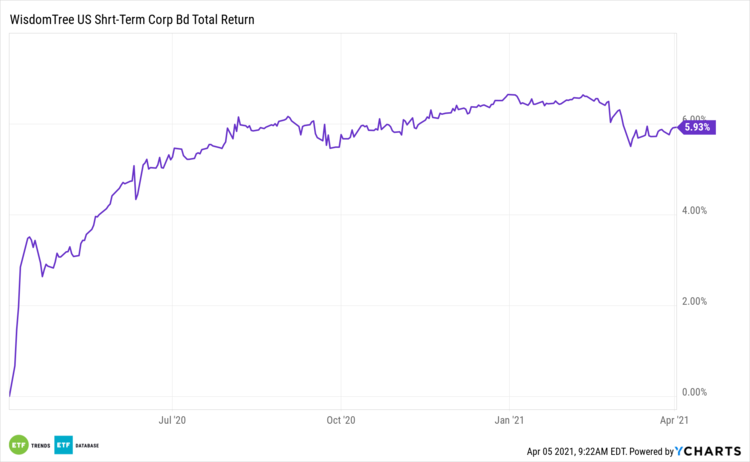
Another advantage of this model portfolio is that it’s not dependent on long duration fare. Within the model portfolio are some shorter duration ideas, including the WisdomTree Fundamental U.S. Short-Term Corporate Bond Fund (SFIG C+).

SFIG 1 Year Total Return

Floating Fare

The model portfolio also features exposure to floating rate bonds – a relevant consideration at a time of interest rate volatility.

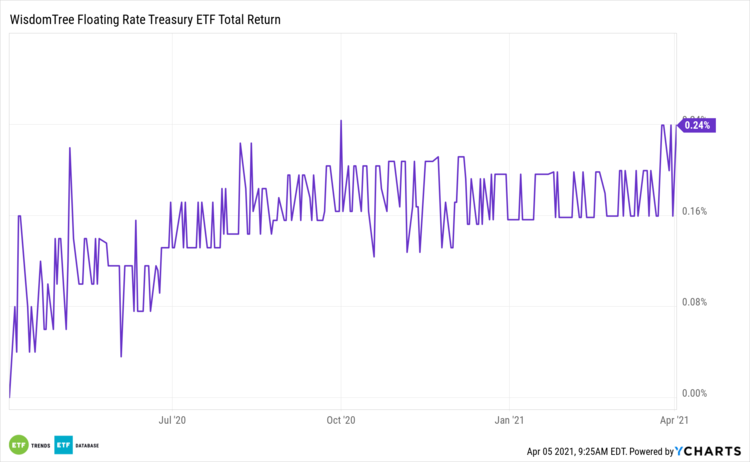
The utility of floating rate notes (FRNs) and assets like the WisdomTree Bloomberg Floating Rate Treasury Fund (USFR A) remains in place.

Floaters have some advantages that TIPS don’t offer. Floating rate note coupon payments are based on a reference rate (90-day t-bills) plus a spread. Since 90-day bills are auctioned every week, the effective duration of floating rate notes is one week, which allows investors to capture higher rates of income as short-term rates rise. This also provides an opportunity for investors to boost income as the Federal Reserve hikes interest rates.

Looking ahead, the floating rate notes will generate more interest if Treasury prices fall and yields rise further, which should play out if the Fed continues on its interest rate normalization schedule.

Floating rate notes, like the name suggests, have a floating interest rate. Specifically, the notes have a so-called reset period with interest rates tied to a benchmark, such as the Fed funds, LIBOR, the prime rate, or the U.S. Treasury bill rate. Due to their short reset periods, these floating rate funds have relatively low rate risk.

Content continues below advertisement

USFR 1 Year Total Return

For more on how to implement model portfolios, visit our Model Portfolio Channel.

Loading Articles...

Advertisement

Is Your Portfolio Positioned With Enough Global Exposure?

ETF Education Channel

How to Allocate Commodities in Portfolios

Tom LydonApr 26, 2022
2022-04-26

A long-running debate in asset allocation circles is how much of a portfolio an investor should...

Core Strategies Channel

Why ETFs Experience Limit Up/Down Protections

Karrie GordonMay 13, 2022
2022-05-13

In a digital age where information moves in milliseconds and millions of participants can transact...

}
X