


After a harsh summer for many countries in the Northern Hemisphere, pressure continues to increase by governments, regulators, and investors on curbing emissions and working to reduce the effects of climate change. Major businesses and financial institutions are moving away from high carbon footprint industries and investments, but there is an increasing push from sustainability advocates and the financial sector to push for change from within and engage with companies on their ESG practices, reports Popular Science.
ESG investing allows investors to put their money into a movement that is working to turn the tide on emissions and best practices by companies across all fronts. While there are very few standards in the U.S. on ESG metrics and reporting, the SEC is currently looking into what companies report and considering accountability for their reporting, and there is a push from within the ESG investment sector to create some standardization for the industry to use.
Either way, ESG investments shouldn’t be boxed into only one segment of a company’s practices but should be incorporated throughout, believes Etienne Cadestin, founder and CEO of Longevity Partners, an environmental consulting firm in the U.K.
“ESG investments are considered as a separate asset class but it shouldn’t be,” Cadestin argues. “ESG should be incorporated in every business’s modus operandi … it’s a best practice. It’s all about running a responsible business.”
ESG practices can be increasingly linked to a company’s potential future performance, particularly as companies that fail to meet public expectations and ESG reporting metrics are being held accountable by shareholders. The rise in advisor and investment firm engagement with companies over their ESG practices is becoming more of the norm within this environment of pressure and focus on sustainability.
“A genuine ESG program includes going to your supply chain and augmenting every single metric to ensure it is meeting ESG targets,” said Rebecca Greenan, senior vice president of finance and operations at software company Crux OCM.
“ESG has the potential to touch every single aspect and department of a company. Everything from infrastructure that they are building, to field operations, to transportation to internal systems and corporate culture. When you can ask any employee of any rank within the company what the company is doing to fulfill their ESG strategy and they can come up with an answer, you have a genuine ESG program,” Greenan explained.
Putnam Engages With Companies, Researches Metrics
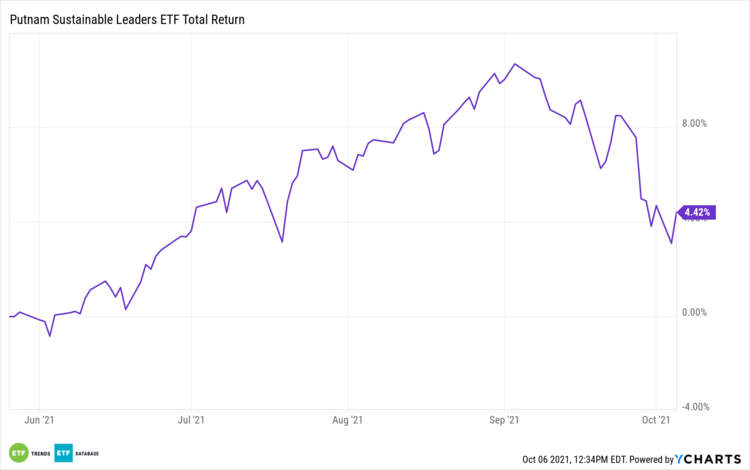
Putnam believes in sustainability and holds ESG practices as a core aspect of its investment approach. Its ESG-focused active sustainability managers are a fundamental part of its work to align shareholder ESG values with investment practices by engaging directly with the companies invested in about their ESG fundamentals and practices.
The Putnam Sustainable Leaders ETF (PLDR ) invests in companies whose focus on ESG issues goes well beyond just basic compliance and for whom ESG is an integral part of their long-term success. These companies have transparent goals and provide consistent, measurable progress updates.
As a semi-transparent fund using the Fidelity model, PLDR does not disclose its current holdings on a daily basis. Instead, it publishes a tracking basket of previously disclosed holdings, liquid ETFs that mirror the portfolio’s investment strategy, and cash and cash equivalents. The tracking portfolio is designed to closely track the actual fund portfolio’s overall performance, and actual portfolio reports are released monthly.
Holdings as of the end of August included Microsoft Corp. (MSFT) at 8.28%, Apple (AAPL) at 7.38%, and Amazon.com (AMZN) at 5.01%. The fund was heavily allocated to information technology stocks at 32.41%, followed by healthcare at 15.91% and consumer discretionary at 14.61%.
PLDR has an expense ratio of 0.59% and had 60 holdings as of the end of August.
For more news, information, and strategy, visit the Big Ideas Channel.

