

Inflation Rises, Bitcoin Institutionalizes
As President Trump’s 90-day tariff reprieve ends, inflation risks are back. Inventory buffers are fading, and July–September CPI may rise 0.4–0.5% MoM. Despite a strong labor market, the Fed is holding rates steady, resisting pressure for cuts.
Fiscal policy is mixed: while the “One Big Beautiful Bill Act” may weigh on growth by 2026, the GENIUS Act (vote on July 14) could be a tailwind—bringing regulatory clarity for stablecoins and tokenized assets.
Bitcoin’s Rally Signals Institutional Shift
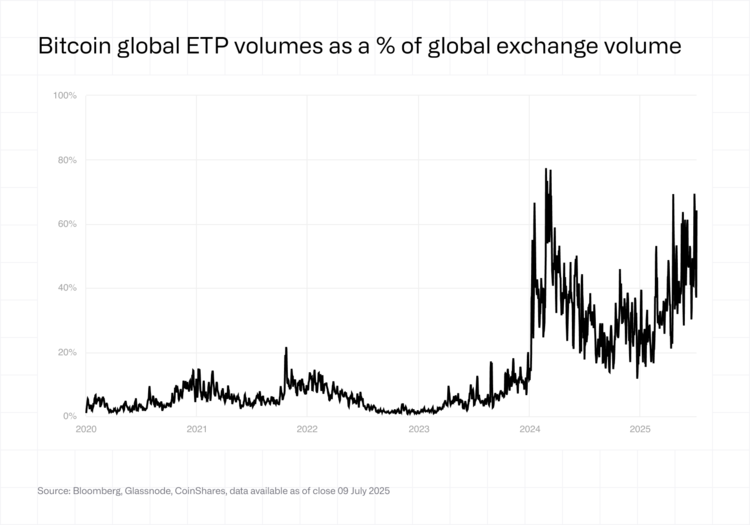
Bitcoin hit $118K, initially on rate expectations, now driven by supply constraints and ETF inflows. Key data points:
- BTC on exchanges down from 18% to 14% (–$65B in liquid supply)
- Spot trading volume cut by 60% YTD
- $68B has flowed into Bitcoin ETFs
Capital is moving from retail venues to regulated structures. Bitcoin is increasingly held, not traded—a behavior shift aligning with long-term institutional adoption.
Why It Matters
For advisors, Bitcoin is no longer just speculative. It’s becoming a macro-sensitive, institutionally-aligned asset, offering inflation resilience and structural tailwinds—packaged in ETF form. Time to reassess its role in portfolio construction.
For more news, information, and strategy, visit the CoinShares Crypto ETF Hub.

