

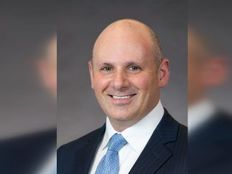
One of the bigger questions facing advisors and investors right now revolves around credit. Inflation, volatility, and Fed rate hikes all loom, potentially heightening credit risk for portfolios. Navigating that risk may be a crucial task in the second half of this year. American Century Investments’ Jason Greenblath recently appeared on the Schwab Network to discuss.
Key Takeaways:
- During his appearance, Greenblath discussed credit risk, Fed rate hikes and opportunities in fixed income.
- American Century Investments offers funds like KORP that provide exposure to corporate bonds.
- With default risk limited, finding yield through astute, firm-by-firm assessment may be the best path forward.
Greenblath is vice president, senior portfolio manager, and director of Corporate Credit Research at American Century Investments. He joined host Nicole Petallides on the “Opening Bell” to analyze how rising Federal Reserve rates might impact the market. This follows his recent discussion with VettaFi, where he shared similar insights on corporate credit and portfolio risk.
“How much higher can rates go before credit starts to be impacted? Probably a lot more than what’s priced in today,” Greenblath said in response to Petallides. “I think we need a lot more rate hikes and a lot more volatility before credit starts to really crack…we think here at American Century that if we see those one or two rate hikes later this year, that the market will respond and continue to buy into these higher yields.”
Rather than the credit market story focusing on default risk, he explained, the situation instead focuses on where to find the best yields. For Greenblath, outside of a small slice of the market — say about five percent — rate shifts impact the yield hunt.
Singles, Doubles, and Credit Risk
Greenblath specifically pointed to long-dated corporates at or above six percent as attractive. Petallides noted that the current market environment is more about hitting “singles and doubles” as opposed to homeruns. That, Greenblath said, makes sense with credit spreads at historical tights.
“We haven’t been this tight in, call it three decades,” he said. “There are some opportunities out there where you can take some larger positions and some larger bets. But what we’re really focused on are what we refer to as singles and doubles.”
“Capturing some dislocations, maybe it’s in the primary market where new issues are mispriced. Maybe it’s an opportunity where a borrower may be flush with cash and buying back debt at a premium,” he added. “In today’s market, those are the opportunities. It’s not a large beta trade.”
See more: American Century’s Gotelli Talks Muni Bond Trends
The American Century Diversified Corporate Bond ETF (KORP ) presents one option to get that exposure. The fund charges a 29 basis point fee and has returned 4.3% over the last 12 months, as per ETF Database data.
For more news, information, and analysis, visit the Core Strategies Content Hub.

