

At first glance, broad-market funds seemingly offer similar exposure to the exact same underlying stocks. Various asset managers offer several heavyweight funds that claim to capture the broader market. However, subtle differences in how these products are built, priced, and managed mean they are far from interchangeable.
Key Takeaways
- Many funds track the same indexes. Structural and management differences such as fee structures and composition make products far from interchangeable.
- Investors can potentially optimize their portfolios by choosing between different funds for the same index. For example, selecting SPY for high liquidity and active trading or SPYM for cost-efficient, long-term holding.
- State Street is the first firm to offer distinct ETFs tracking all three major U.S. benchmarks—the S&P 500, the Dow Jones Industrial Average, and the Nasdaq-100—providing a complete suite of index-based strategies for investors.
State Street exemplifies this complexity, serving as the first ETF manager offering distinct ETFs that track the three major U.S. benchmarks: the Dow Jones Industrial Average, the S&P 500, and the NASDAQ-100.
“With its recently expanded lineup, State Street Investment Management has given ETF investors an array of index based equity strategies to consider. However, understanding what makes them different is paramount,” said Todd Rosenbluth, Head of Research at TMX VettaFi.
Matching Investment Goals: SPY vs. SPYM
Serving as the oldest and most frequently traded ETF in the world, the State Street SPDR S&P 500 ETF (SPY ) comes with an expense ratio of 9 basis points and tracks the S&P 500 providing investors exposure to the 500 largest U.S. companies based on market capitalization. SPY operates under an older Unit Investment Trust (UIT) legal structure, preventing the fund from directly reinvesting cash dividends.
The fund’s massive size and trading volume allow for extreme liquidity and tight bid-ask spreads. The fund possesses the deepest options market of any ETF. Short-term investors use SPY to prioritize optionality and liquidity.
Also tracking the S&P 500, the State Street SPDR Portfolio S&P 500 ETF (SPYM) provides an avenue for the long-term investor. In contrast to SPY’s UIT structure, State Street structured SPYM as a standard open-ended fund, allowing for dividend reinvestment. The fund charges an ultra-low expense ratio of just 2 basis points, approximately 7 basis points cheaper than its peer SPY, making SPYM optimal for long-term investors looking to minimize fees.
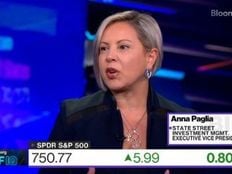
“We don’t look at SPY and SPYM as two separate products, we look at SPY and SPYM as two different parts of our S&P 500 offering,” said Anna Paglia, Executive Vice President at State Street Investment Management, on Bloomberg ETF IQ. “SPY is still the most traded security in the industry and SPYM is the fastest growing new ETF/newish ETF because of the combination of exposure and low fees,” she added.
Focusing on the 30: Breaking Down DIA
Tracking the Dow Jones Industrial Average Index (DJIA), the State Street SPDR Dow Jones Industrial Average ETF Trust (DIA ) provides concentrated exposure to 30 blue-chip U.S. stocks selected by a committee composed of editors from the Wall Street Journal and representatives from S&P Dow Jones Indices. It selects holdings based on their strong reputation, sustained growth, and ability to attract investor interest.
In contrast to the S&P 500 which uses a market-cap weighting method, the DJIA employs a price-weighted methodology where constituents are weighted by absolute stock price. This structure allows for companies with higher share prices to have a stronger influence on the funds overall performance, regardless of the companies market capitalization.
Inside the Nasdaq-100 Offering
In June State Street launched the State Street SPDR Portfolio Nasdaq 100 ETF (QNDX). This fund tracks the NASDAQ-100 Index, providing investors with exposure to the 100 largest non-financial companies listed on the Nasdaq exchange. The fund is heavily concentrated in the technology and consumer discretionary sectors which currently combine for over 83% of the fund’s holdings.
“The addition of QNDX is also something that we find incredibly exciting because today we are the only firm that offers access to the big 3, the Nasdaq 100, the S&P 500, and the Dow Jones Industrial Average,” Paglia noted. “We have had positive flows every day with the exception of one day, which brings this launch to be one of our most successful fund launches.”
The fund launched with an expense ratio of just 10 basis points, making QNDX the cheapest way to gain exposure to the Nasdaq-100 index. This expense ratio is eight basis points less than the Invesco QQQ ETF (QQQ) and five basis points less than the Invesco NASDAQ 100 ETF (QQQM).
For more news, information, and analysis, visit VettaFi | ETFDB.

