
ETFdb Logo
  • ETF Database
  • Content Hubs
    • Themes
      • Active ETF
      • Alternatives
      • Artificial Intelligence
      • China Insights
      • Core Strategies
      • Crypto
      • Disruptive Technology
      • Energy Infrastructure
      • ETF Building Blocks
      • ETF Investing
      • ETF Strategist
      • Financial Literacy
      • Fixed Income
      • Free Cash Flow
      • Future ETFs
      • Innovative ETFs
      • Institutional Income Strategies
      • Leveraged & Inverse
      • Market Insights
      • Market Outlooks
      • Modern Alpha
      • Nuclear Energy
      • Portfolio Strategies
      • Sector Investing
      • Tax Efficient Income
      • Thematic Investing
    • Asset Class
      • Equity
        • U.S. Equity
        • Int'l Developed
        • Emerging Market Equities
      • Alternatives
        • Gold/Silver/Critical Materials
        • Cryptocurrency
        • Currency
        • Volatility
      • Fixed Income
        • Investment Grade Corporates
        • US Treasuries & TIPS
        • High Yield Corporates
        • Int'l Fixed Income
    • ETF Ecosystem
    • ETFs in Canada
    • Market Outlook
    • Crypto ETF Hub
  • Tools
    • ETF Screener
    • ETF Country Exposure Tool
    • ETF Database Categories
    • Indexes
    • Scenario Analysis
    • Watchlists
    • Head-To-Head ETF Comparison Tool
    • Mutual Fund To ETF Converter
    • ETF Stock Exposure Tool
    • ETF Issuer Fund Flows
  • Research
    • ETF Education
    • Equity Investing
    • Dividend ETFs
    • Leveraged ETFs
    • Inverse ETFs
    • Index Education
    • Index Insights
    • Top ETF Sectors
    • Top ETF Issuers
    • Top ETF Industries
  • Webcasts
  • Sectors
    • Sector Investing Content Hub
    • XLK
    • XLI
    • XLU
    • XLY
    • XLP
    • XLRE
    • Sector Power Rankings
    • XLE
    • XLC
    • XLF
    • XLV
    • XLB
  • Multimedia
    • ETF 360 Video Series
    • ETF of the Week Podcast
    • Gaining Perspective Podcast
    • ETF Prime Podcast
    • Video
  • Company
    • About VettaFi
    • Get VettaFi’ed
  • PRO
    • Pro Content
    • Pro Tools
    • Advanced
    • FAQ
    • Free sign up
    • Login
  1. ETF Building Blocks Content Hub
  2. Key Factors Explain Case for This Alternative Energy ETF
ETF Building Blocks Content Hub
Share

Key Factors Explain Case for This Alternative Energy ETF

Tom LydonJun 26, 2020
2020-06-26

Renewable energy ETFs, including the ALPS Clean Energy ETF (ACES B), are hot this year, but that bullishness isn’t a fad. It’s part of a broader, longer-term trend backed by favorable fundamentals and positive implications.

Bolstering the near-term case for ACES is that renewables continue pilfering share from dirty coal, in part explaining why the fund is higher by 27.11% in the current quarter.

“Although U.S. net generation in April fell 6.6% below the same month in 2019, renewable generation has continued to grow as a source of the nation’s supply and surpassed nuclear and coal for the second month in a row,” reports S&P Global Market Intelligence. “Renewables accounted for 23.3% of the total, expanding its lead on nuclear generation as the second-largest source of power supply. A nuclear generation made up 21.5% of the nation’s electricity, while gas-fired generation remained the largest supplier of power with a 39.3% share.”

Data Come Up ACES

ACES follows the CIBC Atlas Clean Energy Index. That benchmark is comprised of U.S. and Canada-based companies that primarily operate in the clean energy sector. Constituents are companies focused on renewables and other clean technologies that enable the evolution of a more sustainable energy sector.

Data confirm that domestic utilities are generating less power via coal and more with alternative energy sources, such as wind and solar, potentially representing a long-term boon for ACES and its components.

“Year-to-date through April, utility-scale generation declined 4.1% year on year to 1.24 billion MWh,” according to S&P Global Market Intelligence. “Renewable generation grew 4.9% on the year to 257.8 million MWh, as the decrease in other renewable sources was offset by solar and wind.”

The growth of wind and solar is relevant to ACES because the fund allocates about 45% of its total weight to companies in those industries.

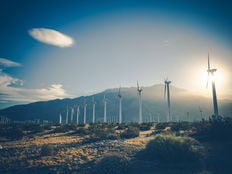
Producers of wind power are working to bolster efficiency with the aim of creating economies of scale that reduce costs and boost output. Should those objectives be realized, wind could add to its already-dominant renewables perch while continuing to steal market share from traditional fossil fuels.

Other alternative energy ETFs include the First Trust Global Wind Energy ETF (FAN A-) and the SPDR Kensho Clean Power ETF (CNRG B).


Content continues below advertisement

Loading Articles...

Advertisement

Is Your Portfolio Positioned With Enough Global Exposure?

ETF Education Channel

How to Allocate Commodities in Portfolios

Tom LydonApr 26, 2022
2022-04-26

A long-running debate in asset allocation circles is how much of a portfolio an investor should...

Core Strategies Channel

Why ETFs Experience Limit Up/Down Protections

Karrie GordonMay 13, 2022
2022-05-13

In a digital age where information moves in milliseconds and millions of participants can transact...

}
X

