
ETFdb Logo
  • ETF Database
  • Content Hubs
    • Themes
      • Active ETF
      • Alternatives
      • Artificial Intelligence
      • China Insights
      • Core Strategies
      • Crypto
      • Disruptive Technology
      • Energy Infrastructure
      • ETF Building Blocks
      • ETF Investing
      • ETF Strategist
      • Financial Literacy
      • Fixed Income
      • Free Cash Flow
      • Future ETFs
      • Innovative ETFs
      • Institutional Income Strategies
      • Leveraged & Inverse
      • Market Insights
      • Market Outlooks
      • Modern Alpha
      • Nuclear Energy
      • Portfolio Strategies
      • Sector Investing
      • Tax Efficient Income
      • Thematic Investing
    • Asset Class
      • Equity
        • U.S. Equity
        • Int'l Developed
        • Emerging Market Equities
      • Alternatives
        • Gold/Silver/Critical Materials
        • Cryptocurrency
        • Currency
        • Volatility
      • Fixed Income
        • Investment Grade Corporates
        • US Treasuries & TIPS
        • High Yield Corporates
        • Int'l Fixed Income
    • ETF Ecosystem
    • ETFs in Canada
    • Market Outlook
    • Crypto ETF Hub
  • Tools
    • ETF Screener
    • ETF Country Exposure Tool
    • ETF Database Categories
    • Indexes
    • Scenario Analysis
    • Watchlists
    • Head-To-Head ETF Comparison Tool
    • Mutual Fund To ETF Converter
    • ETF Stock Exposure Tool
    • ETF Issuer Fund Flows
  • Research
    • ETF Education
    • Equity Investing
    • Dividend ETFs
    • Leveraged ETFs
    • Inverse ETFs
    • Index Education
    • Index Insights
    • Top ETF Sectors
    • Top ETF Issuers
    • Top ETF Industries
  • Webcasts
  • Sectors
    • Sector Investing Content Hub
    • XLK
    • XLI
    • XLU
    • XLY
    • XLP
    • XLRE
    • Sector Power Rankings
    • XLE
    • XLC
    • XLF
    • XLV
    • XLB
  • Multimedia
    • ETF 360 Video Series
    • ETF of the Week Podcast
    • Gaining Perspective Podcast
    • ETF Prime Podcast
    • Video
  • Company
    • About VettaFi
  • PRO
    • Pro Content
    • Pro Tools
    • Advanced
    • FAQ
    • Free sign up
    • Login
  1. ETF Building Blocks Content Hub
  2. New Borrowing in the Energy Sector Is Actually a Positive Sign
ETF Building Blocks Content Hub
Share

New Borrowing in the Energy Sector Is Actually a Positive Sign

Tom LydonJul 20, 2021
2021-07-20

Oil prices have been volatile of late and the decline on July 19 was the worst since September 2020. As a result, the energy sector shed its status as the best-performing sector in the S&P 500 this year with real estate passing it by.

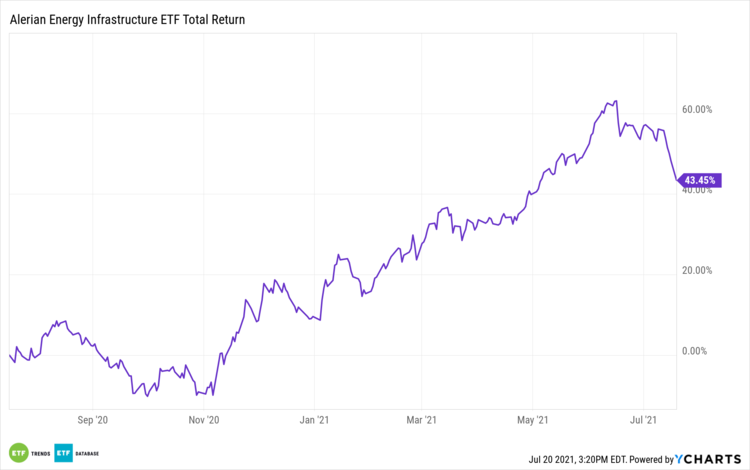
That sounds like trouble for assets like the Alerian Energy Infrastructure ETF (ENFR ), but recent weakness in the energy patch could be an opportunity to examine funds like ENFR. One reason that sentiment could prove accurate is the increasingly favorable fundamental picture for energy companies, including midstream operators.

Believe it or not, recent debt sales by energy companies, many of which took place last year, are actually a positive sign investors may not pass by. Energy firms are using that debt to pay off older, higher interest obligations and solidify their balance sheets. With the renewable energy transition well underway, moves to reduce and eliminate higher interest debt could prove prudent for traditional energy companies.

“The 2014 oil price collapse, in hindsight, may have been the last ‘normal’ crisis. Oil prices fell, funding dried up, supply tightened, prices went up, banks were willing to lend again, and producers poured the money into boosting production,” reports Irina Slav for OilPrice.com.
ENFR 1 Year Performance

Why It Matters to ENFR

Still unbeknownst to many investors, midstream companies, are playing increasingly prominent roles in the aforementioned renewable energy transition. For example, pipeline operators are seen as playing pivotal roles in the move to carbon neutrality.

Firmer balance sheets and reduced debt burdens can enable those companies to meet green energy needs more rapidly. Plus, lenders like the fact that energy companies aren’t borrowing to expand output of fossil fuels.

“Now banks have mellowed towards oil somewhat, but it is an interesting twist that the current loans come with the condition of not boosting output,” according to OilPrice. “Again, it makes sense. For years, the shareholders of U.S. shale oil companies have been complaining about poor returns as the companies put everything into output growth. Now it’s payback time, and shareholders want their returns.”

Another benefit of midstream names borrowing to reduce higher interest debt is that it gives credit investors renewed faith in debt repayment, potentially boosting the allure of energy bonds and perhaps paving the way to credit ratings upgrades.

For more on cornerstone strategies, visit our ETF Building Blocks Channel.


Content continues below advertisement

Loading Articles...

Advertisement

Is Your Portfolio Positioned With Enough Global Exposure?

ETF Education Channel

How to Allocate Commodities in Portfolios

Tom LydonApr 26, 2022
2022-04-26

A long-running debate in asset allocation circles is how much of a portfolio an investor should...

Core Strategies Channel

Why ETFs Experience Limit Up/Down Protections

Karrie GordonMay 13, 2022
2022-05-13

In a digital age where information moves in milliseconds and millions of participants can transact...

}
X
