

ETFdb Logo
  • ETF Database
  • Content Hubs
    • Themes
      • Active ETF
      • Alternatives
      • Artificial Intelligence
      • China Insights
      • Core Strategies
      • Crypto
      • Disruptive Technology
      • Energy Infrastructure
      • ETF Building Blocks
      • ETF Investing
      • ETF Strategist
      • Financial Literacy
      • Fixed Income
      • Free Cash Flow
      • Future ETFs
      • Innovative ETFs
      • Institutional Income Strategies
      • Leveraged & Inverse
      • Market Insights
      • Market Outlooks
      • Modern Alpha
      • Nuclear Energy
      • Portfolio Strategies
      • Sector Investing
      • Tax Efficient Income
      • Thematic Investing
    • Asset Class
      • Equity
        • U.S. Equity
        • Int'l Developed
        • Emerging Market Equities
      • Alternatives
        • Gold/Silver/Critical Materials
        • Cryptocurrency
        • Currency
        • Volatility
      • Fixed Income
        • Investment Grade Corporates
        • US Treasuries & TIPS
        • High Yield Corporates
        • Int'l Fixed Income
    • ETF Ecosystem
    • ETFs in Canada
    • Market Outlook
    • Crypto ETF Hub
  • Tools
    • ETF Screener
    • ETF Country Exposure Tool
    • ETF Database Categories
    • Indexes
    • Scenario Analysis
    • Watchlists
    • Head-To-Head ETF Comparison Tool
    • Mutual Fund To ETF Converter
    • ETF Stock Exposure Tool
    • ETF Issuer Fund Flows
  • Research
    • ETF Education
    • Equity Investing
    • Dividend ETFs
    • Leveraged ETFs
    • Inverse ETFs
    • Index Education
    • Index Insights
    • Top ETF Sectors
    • Top ETF Issuers
    • Top ETF Industries
  • Webcasts
  • Sectors
    • Sector Investing Content Hub
    • XLK
    • XLI
    • XLU
    • XLY
    • XLP
    • XLRE
    • Sector Power Rankings
    • XLE
    • XLC
    • XLF
    • XLV
    • XLB
  • Multimedia
    • ETF 360 Video Series
    • ETF of the Week Podcast
    • Gaining Perspective Podcast
    • ETF Prime Podcast
    • Video
  • Company
    • About VettaFi
    • Get VettaFi’ed
  • PRO
    • Pro Content
    • Pro Tools
    • Advanced
    • FAQ
    • Free sign up
    • Login
  1. ETF Education Content Hub
  2. The Blank-Check Boom: Analyzing the SPAC Space
ETF Education Content Hub
Share

The Blank-Check Boom: Analyzing the SPAC Space

Tom LydonFeb 02, 2021
2021-02-02

The blank-check boom is rolling on, with enthusiasm for special purpose acquisition companies (SPACs) reaching a fevered pitch. Investors looking to get in on the action with exchange traded funds may want to consider active management with the SPAC and New Issue ETF (SPCX ).

The new ETF holds a mix of companies born out of reverse mergers, with blank-check companies as well as SPACs that haven’t yet announced deals.

“In 2020 there were close to 250 special purpose acquisition companies, or SPACS, which raised more than $83 billion, with an average size of $334 million, according to spacinsider.com. So far this year, the count is already at 75,” writes Morningstar analyst Ruth Saldanha.
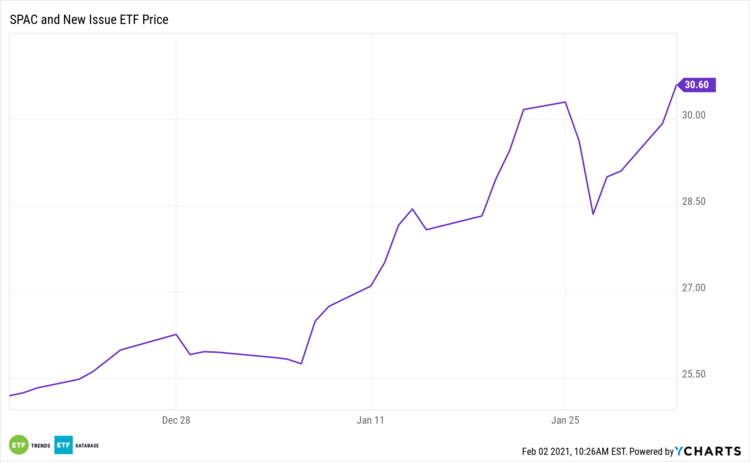
SPCX 6 Month Performance

SPCX Could Be a Special SPAC ETF

Blank-check firms are hot as the IPO process is institutionalized, cumbersome, and inflexible, especially in adapting to the Covid-19 reality where virtual roadshows are less effective. With SPAC, there’s an alternative route for a company to go public, which can be cheaper, quicker, more transparent, and involve agreements and processes within greater purview and control of the company.

SPACs “own and manage nothing except the cash that they raise. Because of this, they are called blank-check companies. They are generally formed by investors, also called sponsors. Sponsors usually have experience and expertise in a particular sector, and it is assumed that the acquisition targets will be companies in that sector. Many sponsors are seasoned private equity investors,” notes Saldanha.

Cementing the utility of SPCX is the niche that it addresses. Though hot, is difficult to stock pick in, particularly before blank-check firms announce deals. The ETF structure allows investors to access the most liquid SPAC IPOs in a diversified basket. SPCX allows both financial advisors and retail investors to participate in an IPO private equity style of investing. Those are meaningful traits because many post-merger companies struggle after SPAC deals, underscoring the potential benefits of eschewing selection of individual names and embracing SPCX’s active approach.

An ETF like SPCX is useful for early entry into hot themes such as electric vehicles.

“In 2020, 26 mobility tech companies merged with SPACs (or are in the process of doing so), representing a combined valuation in excess of $100 billion and generating an average return of 63.8% since their announcement dates, according to PitchBook data,” adds Saldanha. “The blank-check activity is being powered by public investor demand, the capital needs of these R&D-heavy startups, and broad tailwinds for electric vehicles. Arguably, there has never been a better time for makers of unprofitable and often unproven technologies to go public.”

For more news, information, and strategy, visit the ETF Education Channel.


Content continues below advertisement

Loading Articles...

Advertisement

Is Your Portfolio Positioned With Enough Global Exposure?

ETF Education Channel

How to Allocate Commodities in Portfolios

Tom LydonApr 26, 2022
2022-04-26

A long-running debate in asset allocation circles is how much of a portfolio an investor should...

Core Strategies Channel

Why ETFs Experience Limit Up/Down Protections

Karrie GordonMay 13, 2022
2022-05-13

In a digital age where information moves in milliseconds and millions of participants can transact...

}
X
