

Kevin Warsh enters the Fed Chair role with a reputation as a policy dove, but the backdrop he is inheriting makes the path toward rate cuts increasingly difficult. His core thesis centers around a productivity-driven expansion — essentially a “golden age” scenario where technological innovation and efficiency gains raise the economy’s potential growth rate. If productivity rises, businesses produce more output per worker, lower production costs, maintain stronger margins, and can potentially pay higher wages without fueling a wage-price spiral. In essence, the economy can grow faster without generating the same level of inflationary pressure. In Warsh’s view, that creates room for a recalibration towards lower rates while still maintaining price stability.
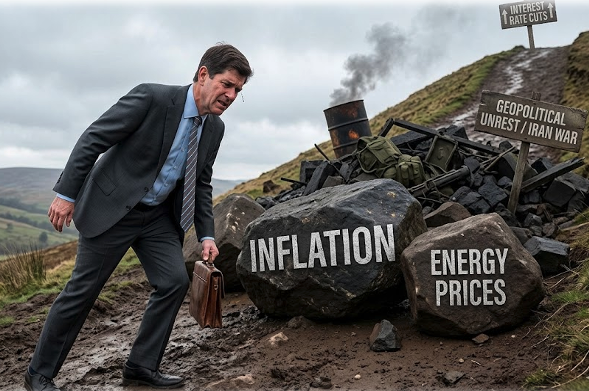
The challenge for Warsh is that the market and many Fed officials are focused on a very different reality. Since his nomination, bond markets have steadily unwound what had initially been viewed as the “Warsh trade” by moving away from expectations for aggressive rate cuts. Geopolitical developments, particularly the war in Iran and the closure of the Strait of Hormuz, have pushed energy prices higher and inflation concerns back to the forefront. Treasury yields have risen alongside firmer inflation data, with April CPI climbing to 3.8% and May forecasts near 4.2% y/y. The combination has reinforced concerns that inflation may remain more persistent than policymakers had hoped, leading some FOMC members to adopt a more cautious stance and keep all policy options on the table, even the potential for rate hikes.
Warsh, however, appears aligned with the broader administration view that many of these inflationary pressures are temporary in nature. His argument is that energy-driven price shocks tied to the Strait of Hormuz disruption would eventually fade, while longer-term disinflationary forces — namely productivity growth — should reassert themselves over time. The issue, of course, is timing. Markets and policymakers have little visibility into when the Strait may reopen or when geopolitical tensions may ease meaningfully, making it difficult to confidently dismiss inflation risks in the near term.
Importantly, Warsh’s policy framework extends beyond rate cuts alone. While he is viewed as dovish on rates, he has also been an advocate for aggressive quantitative tightening. His dual-policy framework — combining front-loaded rate cuts with balance sheet reduction — is designed to support economic activity through lower borrowing costs while simultaneously restraining longer-term inflation pressures by removing excess liquidity from the financial system. That distinction could help ease concerns among more hawkish FOMC members by showing that monetary conditions can still tighten even if rates move lower. Still, gaining support for that approach may prove difficult. The Fed is ultimately a consensus-driven institution, and Warsh now faces the challenge every Fed Chair eventually encounters: not simply managing the economy or the markets but persuading an entire committee to believe in his vision of where the economy is headed next.
Sources: Motley Fool; The Hill; Federal Reserve Bank of Cleveland; publicly available market data
For more news, information, and analysis, visit the ETF Strategist Content Hub.
This report has been prepared for informational purposes only. It may include content generated or assisted by artificial intelligence (AI) tools. While the information presented is based on sources believed to be reliable, it should not be construed as personalized investment advice, considered a recommendation or solicitation for the purchase or sale of any security or strategy. Strategy Holdings, Attributions and/or Sectors mentioned are as of the date indicated, subject to change, and should not be relied upon as current. This does not constitute legal or professional advice and is not tailored to the investment needs of any specific investor. Registration of an investment adviser does not imply any certain level of skill or training. Due to rapidly changing market conditions and the complexity of investment decisions, supplemental information may be required to make informed investment decisions, based on your individual investment objectives and suitability specifications. Investors should seek tailored advice and should understand that statements regarding future prospects of the financial market may not be realized, as past performance does not guarantee and/or is not indicative of future results. Content may not be reproduced, distributed, or transmitted in whole or in part by any means without written permission from Globalt. Regarding permission, as well as to receive a copy of Globalt’s Form ADV Part 2 and Part 3, contact Globalt’s Chief Compliance Officer, 3200 Windy Hill Road SE, Suite 1550E, Atlanta GA 30339. You can obtain more information about Globalt Investments and its advisers via the Internet at adviserinfo.sec.gov, sponsored by the U.S. Securities and Exchange Commission. The opinions and some comments contained herein reflect the judgment of the author, as of the date noted.
Globalt Investments LLC (“Globalt” or the “Firm”) was founded in 1990. It has been registered with the SEC as an Investment Adviser pursuant to the Investment Advisers Act of 1940 since 1991. Effective October 1, 2023, Globalt is a limited liability company owned by the employees and succeeding the “Globalt Investments” which had been a separately identifiable division of Synovus Trust Co. N.A. (its former affiliate since 2002). Globalt is no longer affiliated with Synovus.

