

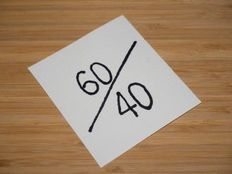
As markets remain more challenged and complex than in the past decade, we believe advisors may need to rethink current allocations — leaving behind the 60/40 portfolio — to capture attractive returns going forward.
While portfolios comprising 60% stocks and 40% bonds became the cornerstone of diversification in the past decades, they have been battered in the past year. The 60/40 portfolio declined an average of 17% in 2022, and we imagine is not expected to fare better this year, as inflation is sticky and rates remain high.
“60/40 portfolios are not diversified portfolios for the investment environment that we’re currently in or that we think we’re going to be in,” Kristof Gleich, president and CIO of Harbor Capital Advisors, told VettaFi. “They are diversified portfolios [in] disinflationary and moderately growing and low inflationary environments. We believe they did really well in that.”
“But regimes shift, environments change, and we think we’re in a new one, and we feel the role of commodities is going to be — it’s a forgotten asset class,” Gleich added.
Gleich said he thinks that in this coming decade, commodities will prove to be an absolutely critical component to a diversified portfolio.
While commodities posted the strongest gain across all asset classes in 2022 and 2021, we suspect commodities remain well positioned for another year of outperformance. As both stocks and bonds saw negative returns last year, commodities helped to offset some of the losses in well-diversified portfolios.
“I also think commodities are an extremely inefficient asset class, and there are structural sources of alpha or return that you can tap into that are not overly complicated, but you need to find the right manager with the right experience and the right discipline, and we feel that we have that with Quantix,” Gleich added.
The Harbor Energy Transition Strategy ETF (RENW ) is sub-advised by Quantix, which has extensive experience investing, trading, and developing innovative commodities strategies.
“I also believe commodities is not a do-it-yourself asset class. It’s not like you can just buy a stock. I really think it takes a professional that knows what they’re doing,” Gleich said. “I wouldn’t invest or speculate on individual commodities because you have to get the fundamental call right. For instance, which commodity to own, and then you have to get the technical call, which is where across the curve do you invest in that because you can’t buy the physical.”
For more news, information, and analysis, visit the Market Insights Channel.
Investors should carefully consider the investment objectives, risks, charges, and expenses of a Harbor fund before investing. To obtain a summary prospectus or prospectus for this and other information, visit harborcapital.com or call 800-422-1050. Read it carefully before investing.
All investments involve risk, including the possible loss of principal. Please refer to the Fund’s prospectus for additional risks associated with the Fund. For the Fund’s prospectus and most current performance, please click: RENW
The views expressed herein are those of Harbor Capital Advisors, Inc. investment professionals at the time the comments were made. They may not be reflective of their current opinions, are subject to change without prior notice, and should not be considered investment advice.
Commodity Risk: The Fund has exposure to commodities through its and/or the Subsidiary’s investments in commodity-linked derivative instruments. Authorized Participant Concentration/Trading Risk: Only authorized participants (“APs”) may engage in creation or redemption transactions directly with the Fund. Commodity-Linked Derivatives Risk: The Fund’s investments in commodity-linked derivative instruments (either directly or through the Subsidiary) and the tracking of an Index comprised of commodity futures may subject the Fund to significantly greater volatility than investments in traditional securities.
Energy Transition Risk: The commodities included in the Index may become less representative of energy transition trends over time, and the Fund’s investments may be significantly impacted by government and corporate policies.
A “60/40 portfolio” is a guidepost portfolio for a moderate risk investor. Portfolio allocations of 60% to equities to seek capital appreciation and 40% allocation to fixed income help mitigate risk and offer potential income.
Diversification in an individual portfolio does not assure a profit.
Alpha is a measure of risk (beta)-adjusted return.
Quantix Commodities, LP is the subadvisor for the Harbor Energy Transition Strategy (RENW).
This article was prepared as Harbor Funds paid sponsorship with VettaFI.
Foreside Fund Services, LLC is the Distributor of the Harbor ETFs.
2750824

