

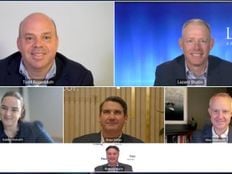
Despite actively managed ETFs only accounting for about 10% of assets within the ETF markets, these strategies are gaining a significant amount of fund flows on a monthly basis. Are these flows justified, and how should advisors and investors be looking at opportunities in the active space?
Key Takeaways:
- Active ETFs are continuing to gain steam, seeing dynamic fund flows that seem to grow each coming year.
- A recent VettaFi webcast broke down the factors backing momentum in the active space, with experts from NEOS, Thornburg, and other firms participating.
- Notably, the experts pointed out that both active and passive funds have a role to play in investors’ portfolios, given their unique use cases.
This topic was discussed at length during VettaFi’s Asset Allocation Summit on June 17, 2026. During the summit, thought leaders and portfolio managers from a variety of different firms gave their perspectives on active management, asset allocation, and much more.
Growing Momentum Behind Active Approaches
To get things started, summit moderator Todd Rosenbluth asked the panel what factors they believe are driving the demand for actively managed ETFs. Richard Kuhn, Head of Product, Managing Director at Thornburg Investment Management took this question, noting that he sees the demand coming from a combination of innovation and availability.
See More: NEOS Talks Tax-Efficient Approach to Options-Based Income ETFs
To elaborate, Kuhn explained that many active ETFs are offering compelling, innovative strategies, aided through the benefits of the ETF wrapper. Furthermore, many of these asset classes have not previously been available via active management, which is helping to drive demand.
“That combined with the demand that we’re seeing has led to this remarkable growth that we’re seeing,” Kuhn added. “Behind all that of course, with ETFs is transparency and tax efficiency, and all those things come together into a perfect storm.”
See More: With Midstream Energy Gaining Attention, Examine This ETF
The Active Vs. Passive ETF Debate
Later in the panel, Rosenbluth pivoted to look at the ongoing debate between active and passive strategies. According to Wes Matthews, CFA, Senior Managing Director, Head of Investment Strategy at NEOS Investments, active and passive funds can easily sit side-by-side in a portfolio. Matthews explained that advisors and investors have many different needs that they seek to solve within their portfolios, which is where a blend of active and passive can shine.
“For us at NEOS, that’s trying to solve an income need,” Matthews added. “It’s trying to figure out how do we create sustainable, predictable, tax-efficient income for folks while still giving them some exposure to the markets. When we have conversations with allocators or model builders, they’re always saying ‘we are going to have cheap beta for sure, but we want to be able to have a sleeve or part of our portfolio that generates income’.”
See More: VIDEO: ETF of the Week: CSHI
Kuhn notably agreed with Matthews, and asserted that there are use cases for both active and passive funds within different portfolios. Kuhn also argued that active and passive funds can both be employed as “either strategic long-term holdings or for tactical quick exposure.”
Going further, he asserted that his team at Thornburg doesn’t debate whether active and passive funds both deserve a spot within portfolios. Instead of engaging in this debate, Thornburg focuses on providing solutions-based investment approaches, according to Kuhn.
The webcast covered far more topics with many other panelists, including product development, ETF lineups, and more. To register for the webcast replay and receive CE credits, click here.
For more news, information, and analysis, visit the Tax Efficient Income Content Hub.

