
ETFdb Logo
  • ETF Database
  • Content Hubs
    • Themes
      • Active ETF
      • Alternatives
      • Artificial Intelligence
      • China Insights
      • Core Strategies
      • Crypto
      • Disruptive Technology
      • Energy Infrastructure
      • ETF Building Blocks
      • ETF Investing
      • ETF Strategist
      • Financial Literacy
      • Fixed Income
      • Free Cash Flow
      • Future ETFs
      • Innovative ETFs
      • Institutional Income Strategies
      • Leveraged & Inverse
      • Market Insights
      • Market Outlooks
      • Modern Alpha
      • Nuclear Energy
      • Portfolio Strategies
      • Sector Investing
      • Tax Efficient Income
      • Thematic Investing
    • Asset Class
      • Equity
        • U.S. Equity
        • Int'l Developed
        • Emerging Market Equities
      • Alternatives
        • Gold/Silver/Critical Materials
        • Cryptocurrency
        • Currency
        • Volatility
      • Fixed Income
        • Investment Grade Corporates
        • US Treasuries & TIPS
        • High Yield Corporates
        • Int'l Fixed Income
    • ETF Ecosystem
    • ETFs in Canada
    • Market Outlook
    • Crypto ETF Hub
  • Tools
    • ETF Screener
    • ETF Country Exposure Tool
    • ETF Database Categories
    • Indexes
    • Scenario Analysis
    • Watchlists
    • Head-To-Head ETF Comparison Tool
    • Mutual Fund To ETF Converter
    • ETF Stock Exposure Tool
    • ETF Issuer Fund Flows
  • Research
    • ETF Education
    • Equity Investing
    • Dividend ETFs
    • Leveraged ETFs
    • Inverse ETFs
    • Index Education
    • Index Insights
    • Top ETF Sectors
    • Top ETF Issuers
    • Top ETF Industries
  • Webcasts
  • Sectors
    • Sector Investing Content Hub
    • XLK
    • XLI
    • XLU
    • XLY
    • XLP
    • XLRE
    • Sector Power Rankings
    • XLE
    • XLC
    • XLF
    • XLV
    • XLB
  • Multimedia
    • ETF 360 Video Series
    • ETF of the Week Podcast
    • Gaining Perspective Podcast
    • ETF Prime Podcast
    • Video
  • Company
    • About VettaFi
    • Get VettaFi’ed
  • PRO
    • Pro Content
    • Pro Tools
    • Advanced
    • FAQ
    • Free sign up
    • Login
  1. Multifactor Content Hub
  2. ROUS Outpaces IWD as Volatility Grows
Multifactor Content Hub
Share

ROUS Outpaces IWD as Volatility Grows

Elle Caruso FitzgeraldOct 26, 2023
2023-10-26

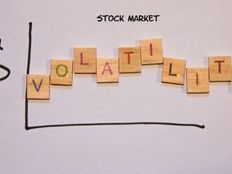
Hartford Funds’ defensive value ETF is outpacing the benchmark as volatility in the market is on the rise.

The Hartford Multifactor US Equity ETF (ROUS A-) is helping to mitigate losses in the growing volatility environment. The VIX reached its highest in nearly seven months last Friday.

Equities have been challenged in the past month. ROUS is down 3.4% while the iShares Russell 1000 Value ETF (IWD A-), which tracks the benchmark Russell 1000 Value, has dropped 5.1% in the past one-month period.

Investors in ROUS are still in the black year to date, as the defensive value ETF is up 2.0%. Meanwhile, the benchmark-tracking IWD is down 2.3% during the same period.

Over a five-year period, ROUS is up 43.2% and IWD has climbed 37.3%.

See more: Using a Multifactor ETF to Navigate Growing Volatility

What Differentiates Defensive Value ETF ‘ROUS’

ROUS takes a multifactor approach to value investing. The Hartford Funds’ ETF seeks to target desired return-enhancing factors as well as to reduce exposure to unrewarded risk exposures.

“By incorporating quality metrics in addition to value ones, multifactor ETFs like ROUS provide a more defensive approach than peer products,” said Todd Rosenbluth, head of research at VettaFi.

The defensive value ETF importantly aims to outperform traditional cap-weighted indexes while reducing volatility by 15% over a full market cycle.

ROUS reduces concentration at the sector, market cap, and individual stock levels, which enhances diversification and limits concentration risk. The fund limits a single stock’s weight to 1.5% of the portfolio, giving ROUS a very different portfolio composition than many passive U.S. large-cap value peers. 

Being overly concentrated at the company level introduces significant idiosyncratic company risk. In cap-weighted indexes, there is an overrepresentation of mega-caps, while persistently under-representing large-caps deeper within the universe. At the sector level, bubble events can enhance exposure at inopportune times.

For more news, information, and analysis, visit the Multifactor Channel.

Investing involves risk, including the possible loss of principal.

This article was prepared as part of Hartford Funds paid sponsorship with VettaFi. Hartford Funds is not affiliated with VettaFi and was not involved in drafting this article. The opinions and forecasts expressed are solely those of VettaFi. Information on this site should not be used or construed as an offer to sell, a solicitation of an offer to buy, a recommendation for any product or as investment advice.


Content continues below advertisement

Loading Articles...

Advertisement

Is Your Portfolio Positioned With Enough Global Exposure?

ETF Education Channel

How to Allocate Commodities in Portfolios

Tom LydonApr 26, 2022
2022-04-26

A long-running debate in asset allocation circles is how much of a portfolio an investor should...

Core Strategies Channel

Why ETFs Experience Limit Up/Down Protections

Karrie GordonMay 13, 2022
2022-05-13

In a digital age where information moves in milliseconds and millions of participants can transact...

}
X