

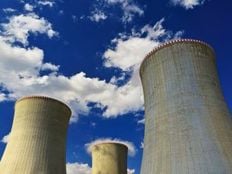
The U.S. nuclear sector is moving beyond discussions about preserving existing reactor capacity. Holtec International (private) recently announced that the restart of a shutdown reactor in Michigan at the Palisades site has reached a “watershed moment,” with major project work closed out and the site transitioning into remaining maintenance, testing, inspections, and operational readiness activities required before startup.
Key Takeaways
- Holtec’s Palisades restart has moved from major project work into the final stage of activity before startup.
- Reactor restarts and life extensions are becoming a practical way to add or preserve large volumes of firm, carbon-free power without waiting for new reactor construction.
- Exposure to utilities and nuclear service providers positions investors to benefit as existing reactor assets become more valuable.
This marks an important step for the first attempted restart of a U.S. nuclear plant that had already entered the decommissioning process. The project provides an important proof point for a broader investment theme. Existing nuclear assets are becoming increasingly valuable as utilities, large power customers, and policymakers look for reliable, carbon-free electricity.
That theme directly connects to several public companies tied to the VettaFi Nuclear Renaissance Index (NUKZX), including Constellation Energy (CEG) and PG&E (PCG), along with the broader restart activity developing around NextEra Energy’s (NEE) Duane Arnold project.
Palisades Moves Toward Restart
The single, 805-megawatt (MW) boiling water reactor (BWR) at Palisades originally ceased operations in May 2022 after more than 40 years of commercial service. The plant then entered the decommissioning process, before Holtec pursued the unprecedented step of returning the facility to operating status. It is a first-of-a-kind attempt to restart a shuttered nuclear plant.
Holtec’s latest update indicates that the large-scale restart work has largely been completed. The remaining effort now centers on routine maintenance, equipment testing, inspections, and operational readiness. The Palisades BWR has nearly completed the first-ever turnaround from decommissioning to operations.
The restart is also symbolically important, as its success would show that other retired nuclear plants can be returned to service. Under the right mix of economics, regulatory support, technical readiness, and customer demand, restarts would be proven possible.
Public Utilities Are Pursuing Similar Opportunities
Constellation Energy (CEG) provides the clearest public-market comparison. The company is working to restart a pressurized water reactor (PWR) in Pennsylvania at the Crane Clean Energy Center. Constellation announced a 20-year power purchase agreement with Microsoft Corp (MSFT) to support the project, which could bring the plant online by 2027.
See more: NUKZ Holding Constellation Injects Millions Into Local Economies
The Crane restart shows how large technology customers can help make nuclear restart projects financeable. Microsoft needs reliable clean power to support its growing electricity demand. Constellation owns a retired nuclear asset with an established operating record. The result is a structure that links data center growth directly to existing nuclear infrastructure.
NextEra Energy (NEE) is pursuing a similar strategy with the Duane Arnold Energy Center in Iowa. The plant shut down in 2020, but NextEra and Google (GOOG) have announced a 25-year agreement tied to restarting the facility. Duane Arnold’s return is expected in 2029 to provide more than 600 MW of nuclear energy to support cloud and AI infrastructure.
PG&E’s (PCG) Diablo Canyon is slightly different because the plant never shut down. Still, it belongs in the same broader category of preserving existing nuclear capacity. Diablo Canyon had been scheduled for retirement, but California moved to keep the plant operating through 2030. The NRC has approved renewed operating licenses that could allow the units to run into the 2040s if California lawmakers authorize operation beyond 2030.
Together, these projects show that the nuclear opportunity is not limited to new construction. The U.S. is also trying to preserve, extend, and recover nuclear capacity that already exists.
Implications for Investors and the Nuclear Value Chain
Reactor restarts create a different investment profile than new reactor development. They are not pre-revenue technology bets in the same way as some advanced reactor companies. They are infrastructure recovery projects tied to existing assets, experienced operators, and large power customers.
NUKZX includes utilities, such as Constellation Energy and PG&E, tied to the broader theme of recovering or preserving nuclear generation. NUKZX serves as the underlying index for the Range Nuclear Renaissance Index ETF (NUKZ ).
The nuclear renaissance will likely unfold across multiple timelines. Advanced reactor developers may offer long-term upside, but existing reactor assets can create nearer-term opportunities. Restarts and life extensions can support electricity demand, provide revenue visibility through power purchase agreements, and increase the value of experienced nuclear operators.
The broader value chain also benefits. Restarting a nuclear plant requires engineering work, inspections, component replacements, instrumentation, maintenance, licensing support, and operational services. These activities can create opportunities for established public companies long before any new reactor reaches commercial operation.
NUKZX offers diversified exposure to this theme by combining utilities, construction and services firms, component suppliers, and fuel-related companies across the nuclear value chain.
Related Research:
DOE’s $17.5B Loan Boosts Nuclear Supply Chain
Critical Momentum: The Nuclear Renaissance Heats Up
Microreactors Reach Milestones & Retailers Go Nuclear
Looking for nuclear insights in your inbox? Subscribe here to keep a pulse on nuclear investing through our weekly research.
For more news, information, and analysis, visit the Nuclear Energy Content Hub.
vettafi.com is owned by VettaFi LLC (“VettaFi”). VettaFi is the index provider for NUKZ, for which it receives an index licensing fee. However, NUKZ is not issued, sponsored, endorsed, or sold by VettaFi. VettaFi has no obligation or liability in connection with the issuance, administration, marketing, or trading of NUKZ.

