

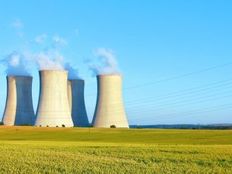
The federal government has been very focused on supporting nuclear development in the U.S. Within that framework, states are currently vying to host Nuclear Lifecycle Innovation Campuses (NLIC) and boost their economies. The potential payoff is enormous: A single campus could attract up to $50 billion in private investment while creating tens of thousands of high-paying jobs and strengthening domestic energy security.
For investors, these projects represent visible, multi-year contracting pipelines across the full nuclear value chain, which is exactly the kind of catalyst that accelerates deployment for companies already active in fuel-cycle infrastructure.
With the U.S. Department of Energy’s (DOE) April 1 deadline for responses to its related Request for Information (RFI) now just days away, two states have taken clear legislative steps to position themselves as hosts. South Carolina and Tennessee are moving the fastest, each pitching integrated hubs that would co-locate uranium conversion, enrichment, fuel fabrication, recycling, advanced reactors, and even radioisotope production.
Why These Campuses Matter
The DOE envisions regional NLICs that bring together every stage of the nuclear fuel cycle under one roof. This co-location reduces logistics friction, speeds permitting, and makes it far easier to recycle used fuel, fabricate new fuel, and deploy reactors that power data centers or local/national grids. Private capital flows naturally when states offer ready infrastructure, skilled workforces, and aligned policy support. The result is faster commercialization of advanced reactors and a resilient domestic supply chain insulated from foreign dependence.
South Carolina and Tennessee Step Forward
South Carolina is aggressively courting the opportunity at the Savannah River Site (SRS). SRS has served as one of the DOE’s flagship nuclear complexes for more than 70 years, originally established to produce plutonium and tritium for national defense. After the shutdown of the main facilities and until recently, the site focused on environmental cleanup, high-level waste handling, and nuclear materials management. With the restart of plutonium recycling and uranium recovery, SRS is positioned to become a ready-made “nuclear industrial city” capable of hosting fuel fabrication, used fuel recycling, advanced reactor testing, and co-located data center power projects.
Governor McMaster directed the Department of Commerce to prepare a formal response after direct outreach from Energy Secretary Chris Wright. South Carolina Senate Joint Resolution S. 936 unanimously cleared a Senate panel and affirms the state’s commitment to becoming “the nation’s premier host” for a full nuclear industrial campus.
Tennessee is equally determined. Tennessee Senate Joint Resolution SJR0887 urges Governor Lee to submit a comprehensive proposal by the April 1 deadline and pledges full legislative backing. The resolution highlights Oak Ridge’s 80+ years of nuclear leadership, more than 230 nuclear companies already in the state, and recent state funding that has already catalyzed billions in private investment. It passed the House and is advancing quickly in the Senate.
Tennessee’s pitch gains extra strength from private developments already underway, most notably with Oklo’s (OKLO) Advanced Fuel Center in Oak Ridge. Announced in 2025 as the nation’s first privately funded commercial used nuclear fuel recycling facility, the $1.68 billion project will recycle spent fuel into fresh fuel for advanced reactors. A campus designation would seamlessly integrate this anchor facility, turning Tennessee into a hub for recycling, fabrication, and power generation.
Oklo’s Recycling Assets Fit Perfectly
The synergies were highlighted multiple times during Oklo’s recent earnings call. The company noted their facilities in Tennessee and Texas will serve as major anchor points for potential NLIC sites. Additionally, their advanced Aurora reactor design to be deployed in partnership with Meta Platforms (META) in Ohio will be adjacent to Centrus Energy’s (LEU) enrichment facility. Oklo and Centrus are in discussions for pursuing a joint venture to serve additional portions of the nuclear fuel chain, which creates incentives for the state of Ohio to join the effort as well.
Clear Contracting Wins for Construction and Fuel Cycle Specialists
These campuses will require massive engineering, construction, and specialized equipment work. This is exactly the expertise already demonstrated by several constituents of the VettaFi Nuclear Renaissance Index (NUKZX). Fluor (FLR) and Amentum (AMTM) bring decades of experience designing, building, and managing nuclear facilities. Fluor has delivered reprocessing plants and major DOE site projects, while Amentum currently handles large-scale decontamination, decommissioning, and new build nuclear infrastructure. Both are ideally positioned to win the engineering, procurement, and construction packages for campus build-outs.
BWX Technologies (BWXT) stands out for its proven capabilities in nuclear fuel fabrication. The company already manufactures fuel for U.S. naval reactors, operates advanced fuel lines, and recently won a $1.5 billion NNSA contract to expand domestic enrichment infrastructure in Oak Ridge. BWXT’s expertise in recycling-related processes and precision manufacturing makes it a natural supplier for any campus fuel fabrication component.
Solstice Materials (SOLS) has another standout anchor facility with their uranium conversion plant in Illinois. Their facility is close to the former Manhattan Project-related enrichment facility, which is now home to two different uranium enrichment companies. General Matter (Private) and Global Laser Enrichment, which is jointly owned by Cameco (CCJ) and Silex Systems (SLX.ASX), are developing new facilities there to reinvigorate the American nuclear fuel chain.
FLR, AMTM, BWXT, SOLS, CCJ, and SLX are all constituents of NUKZX. NUKZX is differentiated by its emphasis on companies in construction and services like FLR, AMTM and BWXT. The remaining companies are included in the fuel category of NUKZX.
NUKZX is the underlying index for the Range Nuclear Renaissance Index ETF (NUKZ ).
Related Research
Profiling Reactor Technology: Westinghouse and Oklo
The Geopolitical Bull Case for Nuclear
Not All Nuclear Exposure Is Created Equally
Companies Powering Nuclear Subs & Advanced Reactor Tech
Iran Conflict Reinforces Nuclear Energy’s Stability
Looking for nuclear insights in your inbox? Subscribe here to keep a pulse on nuclear investing through our weekly research.
For more news, information, and analysis, visit the Nuclear Energy Content Hub.
vettafi.com is owned by VettaFi LLC (“VettaFi”). VettaFi is the index provider for NUKZ, for which it receives an index licensing fee. However, NUKZ is not issued, sponsored, endorsed, or sold by VettaFi. VettaFi has no obligation or liability in connection with the issuance, administration, marketing, or trading of NUKZ.

