
ETFdb Logo
  • ETF Database
  • Content Hubs
    • Themes
      • Active ETF
      • Alternatives
      • Artificial Intelligence
      • China Insights
      • Core Strategies
      • Crypto
      • Disruptive Technology
      • Energy Infrastructure
      • ETF Building Blocks
      • ETF Investing
      • ETF Strategist
      • Financial Literacy
      • Fixed Income
      • Free Cash Flow
      • Future ETFs
      • Innovative ETFs
      • Institutional Income Strategies
      • Leveraged & Inverse
      • Market Insights
      • Market Outlooks
      • Modern Alpha
      • Nuclear Energy
      • Portfolio Strategies
      • Sector Investing
      • Tax Efficient Income
      • Thematic Investing
    • Asset Class
      • Equity
        • U.S. Equity
        • Int'l Developed
        • Emerging Market Equities
      • Alternatives
        • Gold/Silver/Critical Materials
        • Cryptocurrency
        • Currency
        • Volatility
      • Fixed Income
        • Investment Grade Corporates
        • US Treasuries & TIPS
        • High Yield Corporates
        • Int'l Fixed Income
    • ETF Ecosystem
    • ETFs in Canada
    • Market Outlook
    • Crypto ETF Hub
  • Tools
    • ETF Screener
    • ETF Country Exposure Tool
    • ETF Database Categories
    • Indexes
    • Scenario Analysis
    • Watchlists
    • Head-To-Head ETF Comparison Tool
    • Mutual Fund To ETF Converter
    • ETF Stock Exposure Tool
    • ETF Issuer Fund Flows
  • Research
    • ETF Education
    • Equity Investing
    • Dividend ETFs
    • Leveraged ETFs
    • Inverse ETFs
    • Index Education
    • Index Insights
    • Top ETF Sectors
    • Top ETF Issuers
    • Top ETF Industries
  • Webcasts
  • Sectors
    • Sector Investing Content Hub
    • XLK
    • XLI
    • XLU
    • XLY
    • XLP
    • XLRE
    • Sector Power Rankings
    • XLE
    • XLC
    • XLF
    • XLV
    • XLB
  • Multimedia
    • ETF 360 Video Series
    • ETF of the Week Podcast
    • Gaining Perspective Podcast
    • ETF Prime Podcast
    • Video
  • Company
    • About VettaFi
    • Get VettaFi’ed
  • PRO
    • Pro Content
    • Pro Tools
    • Advanced
    • FAQ
    • Free sign up
    • Login
  1. Multifactor Content Hub
  2. 2nd Quarter Saw Great Returns in Corporate Bonds
Multifactor Content Hub
Share

2nd Quarter Saw Great Returns in Corporate Bonds

Ben HernandezJul 14, 2020
2020-07-14

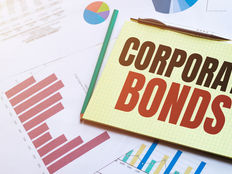
As the Federal Reserve poured funds into the bond markets, particularly exchange-traded funds (ETFs) and individual bonds, it was corporate bonds that were the major beneficiary during the second quarter.

A one-two combination of tighter credit spreads and the central bank keeping rates low allowed companies to refinance current debt at lower rates or take on more debt.

“The combination of tightening credit spreads and falling interest rates led to an admirable performance across the fixed-income sector during the second quarter,” wrote Dave Sekera in a Morningstar article. “The Morningstar US Core Bond Index (our broadest measure of the fixed-income universe) rose 2.82%. The increase was largely driven by a significant tightening of credit spreads in the corporate bond market.”

“The standout returns this quarter were generated in the corporate bond sector as credit spreads tightened significantly, recouping much of the widening that occurred during the market rout in the first quarter,” Sekera noted further. “Near the end of the first quarter, we highlighted that corporate credit spreads had widened to what we viewed as attractive levels for long-term investors. For investors able to withstand additional market volatility, we suggested that it was an opportune time to rebalance fixed-income portfolios and to layer in additional corporate credit fund exposure.”

An Active, Investment-Grade ETF Option in Corporate Bonds

If high yield is too much risk to bear, investors can opt for an investment-grade option like the Principal Investment Grade Corporate Active ETF (IG B-). IG seeks to provide current income and, as a secondary objective, capital appreciation.

Additionally, the fund is an actively managed ETF that seeks to achieve its investment objective by investing, under normal circumstances, at least 80% of its net assets, plus any borrowings for investment purposes, in investment grade corporate bonds and other fixed income securities at the time of purchase. “Investment grade” securities are rated BBB- or higher by S&P Global Ratings or Baa3 or higher by Moody’s Investors Service, Inc. or, if unrated, of comparable quality in the opinion of those selecting such investments.

Key features of IG:

  • Active management: Combines bottom-up independent credit research with top-down strategy, seeking alpha through credit selection, industry rotation, and curve positioning
  • A straight forward process: Investment grade exposure, free of derivatives, unrated issues, and large duration bets
  • A strategic perspective: Forward looking, the iterative process seeks credits exhibiting stable-to-improving credit rating trajectory which may benefit from spread compression and income premiums


Content continues below advertisement

Loading Articles...

Advertisement

Is Your Portfolio Positioned With Enough Global Exposure?

ETF Education Channel

How to Allocate Commodities in Portfolios

Tom LydonApr 26, 2022
2022-04-26

A long-running debate in asset allocation circles is how much of a portfolio an investor should...

Core Strategies Channel

Why ETFs Experience Limit Up/Down Protections

Karrie GordonMay 13, 2022
2022-05-13

In a digital age where information moves in milliseconds and millions of participants can transact...

}
X