

When the world was going to heck in a handbasket back in 2008, the Federal Reserve made some unprecedented moves to try and jumpstart the U.S. economy. This included major bond buying programs and cutting interest rates to basically zero. The idea was that the low rates would spur borrowing, and also boost economic activity.
Since the financial crisis, interest rates continued to be at historic low levels, as various pieces of economic data were not exactly extremely positive or displayed real improvement. Aside from a few raises since December 2015, interest rates were at 0.25% or 0.50% for nearly six years. Take a look at the Federal Reserve interest rate decision table below to see just how “lower for longer” really played out.
But recently, the data turned towards rising interest rates’ favor and financial markets predicted, with near certainty, that the Federal Reserve would raise rates in December 2016. The markets were indeed correct in their assessment, as the U.S. Federal Reserve raised its benchmark interest rate to 0.75% from 0.50%, signaling an improving outlook for the U.S. economy.
The Fed increased its benchmark rate 25 basis points to 1.0% at its March 2017 meeting and another 25 basis points to 1.25% in its June 2017 meeting. According to Janet Yellen, the Federal Reserve is focused on achieving a 2% inflation target and will begin to shrink the Fed’s current $4.5 trillion asset base on its balance sheet. Even though Ms. Yellen declined to give a specific timeline for beginning to shrink the Fed’s balance sheet, she said, “We could put this into effect relatively soon.”
For investors, rising interest rates are finally here. And that has plenty of implications for our portfolios.
Federal Reserve Interest Rate Decision Table
Latest Release
| Date | Actual | Consensus | Previous |
|---|---|---|---|
| 03-21-2018 | 1.75% | 1.75% | 1.50% |
History
| Date | Actual | Consensus | Previous |
|---|---|---|---|
| 01-31-2018 | 1.50% | 1.50% | 1.50% |
| 12-13-2017 | 1.50% | 1.50% | 1.25% |
| 11-01-2017 | 1.25% | 1.25% | 1.25% |
| 09-20-2017 | 1.25% | 1.25% | 1.25% |
| 07-26-2017 | 1.25% | 1.25% | 1.25% |
| 06-14-2017 | 1.25% | 1.25% | 1.00% |
| 05-03-2017 | 1.00% | 1.00% | 1.00% |
| 03-15-2017 | 1.00% | 1.00% | 0.75% |
| 02-01-2017 | 0.75% | 0.75% | 0.75% |
| 12-14-2016 | 0.75% | 0.75% | 0.50% |
| 11-02-2016 | 0.50% | 0.50% | 0.50% |
| 09-21-2016 | 0.50% | 0.50% | 0.50% |
| 07-27-2016 | 0.50% | 0.50% | 0.50% |
| 06-15-2016 | 0.50% | 0.50% | 0.50% |
| 04-27-2016 | 0.50% | 0.50% | 0.50% |
| 03-16-2016 | 0.50% | 0.50% | 0.50% |
| 01-27-2016 | 0.50% | 0.50% | 0.50% |
| 12-16-2015 | 0.50% | 0.50% | 0.25% |
| 10-28-2015 | 0.25% | 0.25% | 0.25% |
| 09-17-2015 | 0.25% | 0.25% | 0.25% |
| 07-29-2015 | 0.25% | 0.25% | 0.25% |
| 06-17-2015 | 0.25% | 0.25% | 0.25% |
| 04-29-2015 | 0.25% | 0.25% | 0.25% |
| 03-18-2015 | 0.25% | 0.25% | 0.25% |
| 01-28-2015 | 0.25% | 0.25% | 0.25% |
Implications of Rising Rates
Just like many things in the economy, the Fed’s decision to raise interest rates affects a multitude of different sectors and factors differently. But the real boost comes from the prime rate. The prime rate is basically the amount that banks will charge their most creditworthy customers. Less creditworthy customers will receive rates built off of this prime rate. In essence, it costs more to borrow money.
That’s a problem for some sectors – such as utilities, real estate investment trusts (REITs) and midstream energy firms – since they require huge amounts of CAPEX spending to keep going. The higher borrowing costs can clip their revenues and profits.
However, investors are able to make more off their savings. Traditional savings products, such as money market accounts, CDs and savings accounts, use the prime rate to determine the interest they’ll pay investors. The higher the Federal Reserve’s benchmark rate, the higher your savings account will pay.
That, however, tends to be a problem for bond investors.
As new bonds are issued and come to the market, they tend to be priced using formulas derived from the prime rate. Remember, the prime rate represents relatively “risk-free” credit. That mean new bonds tend to have higher interest/coupon payments than comparable bonds already on the market. As a result, the bonds already on the market will fall in price in order to match the same coupon rate at which the new issues are trading.
This measure of price sensitivity towards interest rates is called a bond’s duration. The longer the duration, the worse the price drop. For example, if interest rates were to rise by 1%, a bond fund – like the uber-popular iShares Barclays Aggregate Bond Fund (AGG ) and its average duration of ten years – would see its price fall by about 10%. The longer the duration, the worse the drop. Meanwhile, a similar investment with a one-year duration might only decline only 1%. That’s because, it’ll take roughly ten years for a bond in the AGG to “mature,” and be reissued by a firm or government.
For investors who are holding long-dated bonds for their higher yields, the duration and the Fed’s moves to increase interest rates is a huge problem. But there are ways to avoid the problem and actually profit from rising rates.
ETFs to Play Rising Interest Rates
Given that shorter duration bonds hold up better when interest rates rise and benefit from the increase faster, they make a great choice for investors looking to cash in on the Fed’s decision. And there are plenty to choose from. Here at ETFdb.com, we currently track 64 different ones. Here are 8 ETFs that could benefit from rising interest rates:
| Ticker | Name | Asset Class | Expense Ratio | Stance |
|---|---|---|---|---|
| (CSJ ) | iShares 1-3 Year Credit Bond ETF | Bond | 0.20% | This ETF provides broad exposure to credit markets, while maintaining a short term posture and interest rate protection. |
| (SJNK ) | SPDR Barclays Short Term High Yield Bond ETF | Bond | 0.40% | By choosing this ETF, investors can pick-up a few more percentage points of yield among short term bonds. |
| (VCSH ) | Vanguard Short-Term Corporate Bond ETF | Bond | 0.12% | By eliminating government bonds, this ETF provides extra yield, but still maintains a high credit rating. |
| (BKLN ) | PowerShares Senior Loan Portfolio | Bond | 0.65% | The nature of the funds holdings allow for it to float- up or down- with interest rates and allows for protection |
| (VIG ) | Vanguard Dividend Appreciation ETF | Equity | 0.10% | Dividend growth has historically been higher than interest rate rises. this fund allows investors to capture that phenomenon. |
| (DGRW ) | WisdomTree U.S. Quality Dividend Growth Fund | Equity | 0.28% | Dividend growth has historically been higher than interest rate rises. this fund allows investors to capture that phenomenon. |
| (NEAR ) | iShares Short Maturity Bond | Bond | 0.25% | By using ultra-short term bonds, investors can still hold “cash” but pick-up a few more basis points in yield. |
| (MINT ) | PIMCO Enhanced Short Maturity ETF | Bond | 0.35% | This actively managed ETF, uses commercial paper and other obligations to provide a stable money market like return with higher distributions. |
The iShares 1-3 Year Credit Bond ETF (CSJ ) may be a good starting point. CSJ bets on investment grade bonds from both the U.S. government and corporations that have maturities of one to three years. That keeps the fund’s duration low and CSJ shouldn’t drop as much when the Fed raises rates. It’ll have an easier time rolling its debt to newer, higher yielding issues. Investors looking for slightly more yield could solely bet on corporate short-term bonds with the SPDR Barclays Short Term High Yield Bond ETF (SJNK ) and Vanguard Short-Term Corporate Bond ETF (VCSH ).
Another avenue for rising rate protection could be senior- and floating-rate bank loans. Senior-rate bank loans adjust rates every 30 to 90 days, and are directly tied to benchmarks like the prime rate. That makes them quite attractive in rising rate environments. The $5.7 billion PowerShares Senior Loan Portfolio (BKLN ) is the largest and easiest way to play this sector. The ETF bets on 111 different floating rate loans and yields 5.05%.
Investors may want to consider stocks as a rising rate play. Historically, many dividend stocks have increased their payouts well above measures of inflation and interest rate rises. Over time, these stocks and their rising payouts tend to outperform as investors clamor for the higher payouts. Both the Vanguard Dividend Appreciation ETF (VIG ) and WisdomTree U.S. Quality Dividend Growth Fund (DGRW ) bet on indexes that reward dividend growth.
Finally, cash remains an ideal place to play higher yields. With a duration of basically zero, cash is the first place to realize higher rates. The iShares Short Maturity Bond (NEAR ) and PIMCO Enhanced Short Maturity ETF (MINT ) bet on cash-like instruments and commercial paper. The pair make an ideal place to camp out, as interest rates rise.
The Bottom Line
After reducing interest rates to near zero during the recession, the Fed has finally raised those interest rates, which has wide-reaching implications for investors – particularly those in bond portfolios. However, there are ways to mitigate the damage and even profit from the rise in rates.

Duration Hedging and Rising Rates
2017-03-16After what seems like forever, we have finally see the first Federal Reserve rate hike. Since the...
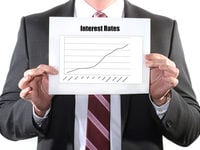
Optimistic Federal Reserve Hikes Rates
2016-12-15As widely expected, the U.S. Federal Reserve raised its benchmark interest rate to 0.75% from...

What History of the Fed Shows Us About Rising Interest Rates
2015-11-30It has come. The Fed told us so. In December 2016, the U.S. Federal Reserve raised its benchmark...

Risk Factors for Rising Interest Rates
2015-11-23In December 2016, the U.S. Federal Reserve raised its benchmark interest rate to 0.75% from...

Positioning Your Bond ETF Portfolio for Rising Rates
2015-11-16Making tactical allocations within your portfolios’ bond competent in anticipation of changes in...
6 ETFs for Rising Interest Rates
2015-11-10We all want to know when interest rates are expected to rise and how to benefit from them. Read...

5 Not-So-Obvious Ways to Deal with the Risk of Rising Rates
2015-10-26The prospects of rising rates amid an anemic global-economic recovery has challenged even the...

Using ETFs To Measure Interest Rate Risk
2015-10-08When managing a fixed income portfolio, there are two primary risk factors that financial...

Bond ETFs That Steer Clear of Interest Rate Risk
2015-10-07Innovation in the bond ETF space in recent years has been truly impressive, resulting in the...

Rising Interest Rates and the Agony in REIT ETFs
2015-10-07The real estate market is known for its large booms and busts that happen over time. The bust of...

Interest Rates and Financial ETFs: What Investors Need to Know
2015-09-30It is now official. The Federal Reserve has raised its key benchmark interest rate. In December...

