
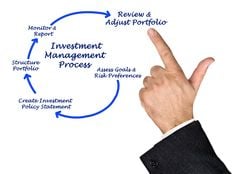
Taking a trip? You’ll need a map to get there. Have a future savings goal in mind? You’ll need a map for that, too.
It’s not uncommon for investors of all stripes, knowledge or means to blindly trust their portfolio managers to handle investments without providing much information on their needs and wants. Some amount of trust is good and should be part of that relationship. However, other information needs to be provided so the investment manager knows the client’s general goals and objectives. Such a document provided to the investment manager is known as an Investment Policy Statement (IPS).
The IPS really is a two-way document. As mentioned, the client provides the particulars of his or her financial situation, income, financial goals and objectives. The manager provides the strategies he or she employs to meet those objectives, thereby creating a full road map as to how and why financial goals will be met. It also helps the investor stay on track toward the goals during market fluctuations and down cycles.
Risk Tolerance and Time Horizon
Before a proper portfolio can be created, an IPS must discuss the risk tolerance of the individual client – essentially, the willingness and ability to take on risk within investments. Most investment managers and banks provide risk tolerance questionnaires asking clients about their abilities to take on risk, how much they are willing to lose over certain periods of time etc. Risk tolerance is not just one’s comfort level with the possibility of losing savings or the variability of investment returns; it also has to do with one’s stage in life. For example, a young individual just starting out in his or her career and beginning the thought process for savings has many years to withstand market cycles and should be comfortable with greater risk.
Similarly, a person closer to retirement and nearing the end of earning years might have less risk tolerance to lose funds, as he or she will need the money sooner and cannot afford to wait out market cycles. This is where a time horizon plays a crucial role in the IPS. The willingness to take on more risk coupled with a long time horizon until retirement will alter the IPS’ portfolio make-up versus a shorter time horizon and lower ability/willingness to take on risk.
Liquidity Needs
Other variables are necessary to put into the IPS to help meet the goals of both the investor and the manager. Liquidity needs is one item. It’s important for all investors to – as best as they can – assess how much money they will need at certain points of their lives. For example, a young couple with small children might attempt to save for things such as college tuition, camps and extra-curricular activities. Also, if an investor knows he or she wants to travel, purchase a second home or has other major expenses, that investor can assess liquidity needs and add that to the goals within the IPS.
Sometimes, it is more difficult to know certain expenses – such as those for medical needs, caring for elderly parents or other unforeseen expenses. It is wise to add these to the known goals to help cushion savings and provide breathing space in case the need for liquidity appears from an unknown source. Furthermore, retired and older investors will have high liquidity needs from their portfolios, especially if those will be their main sources of retirement money.
Asset Allocation
The ability to properly assess objectives, liquidity needs, time horizon, risk and other special circumstances lead the manager – with the client’s input – to create a customized portfolio. An asset allocation strategy looks to balance risk and reward by selecting assets within the portfolio to meet the client’s goals. Generally, the main asset classes – equities, fixed income, commodities, currencies, alternative investments, real estate, and cash and equivalents – are selected for the client.
The allocation of each investment depends on those items mentioned above. For example, equities generally refer to publicly traded stocks and are subject to market fluctuations. Some have higher risk/reward ratios than others, but are allocated to investors with longer time horizons and higher risk tolerances. Fixed-income investments or bonds are considered less risky than equities, and generally are used for more conservative investors or those with shorter time horizons – but reward potentials generally are lower than for equities. Cash is the most conservative.
Each of these asset classes are allocated depending on how the client described his or her needs, risk and tolerance. Percentages of investments skew to a higher or lower risk investment depending on that tolerance and other variables.
The Bottom Line
By creating an IPS, both the investor and manager have clear paths to a personal investment strategy that is put in writing. The IPS helps keep everyone on those paths during market fluctuations and can help discipline the investor to ensure long-term income growth.

