

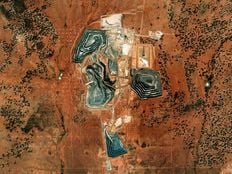
Exposure to critical minerals, specifically rare earths, provides an opportunity for investors to capitalize on growth and diversify their portfolios simultaneously. However, there are also geopolitical implications that investors should know about as well. In particular, more nations are reducing their reliance on China. The Critical Minerals Framework between the United States and Australia highlighted this global shift.
U.S.-Australia Bilateral Cooperation
See more: How China’s Rare Earths Dominance Reshapes Defense Strategy
The geopolitical landscape of the energy transition is shifting. As a result, the United States is taking deliberate steps to reduce its reliance on supply chains for critical minerals. As mentioned, a pivotal development in this direction is highlighted by the U.S.-Australia Critical Minerals Framework Agreement. The contract was signed in October of last year and essentially deepens bilateral cooperation between the two nations. The objective for both nations is to strengthen the industrial base for essential resources like lithium, cobalt, and rare earth elements.
Australia, in particular, occupies a unique position in the global supply chain. The country serves as a trusted, stable partner to the U.S. and other nations with vast reserves of the minerals required for applications in defense, electric vehicles, and high-performance electronics.
By synchronizing their trade policies and facilitating investment in mining and refining capacity, the two nations aim to create a secure, resilient, and transparent supply chain. For the U.S. defense and technology sectors specifically, this cooperation ensures that the raw materials necessary for AI accelerators, renewable energy infrastructure, advanced defense systems, and other advancing technologies are sourced from reliable allies.
As the U.S.-Australia partnership unlocks new mining and refining projects, this also creates investment opportunities in companies poised to scale their operations. ETFs, in particular, provide investors with a vehicle that efficiently and flexibly provides this level of exposure.
An Ex-China Opportunity
Befittingly, exposure to Australian and U.S. companies is underscored in the Sprott Rare Earths ex-China ETF (REXC). As the U.S. and Australia accelerate the buildout of non-Chinese processing hubs, REXC could capture this impending growth of the companies leading this transition.
REXC provides investors with pure-play exposure to rare earths by maintaining a targeted 95–96% allocation to rare earth companies. The fund invests across the entire supply chain that includes exploration, mining, and the critical downstream separation and refining processes. To mitigate the geopolitical risk tied to China, the fund intentionally excludes Chinese companies, aligning with the strategic re-shoring efforts of Western allies.
For the latest standardized performance and holdings of Sprott Rare Earths Ex-China ETF, please visit REXC. Past performance is no guarantee of future results.
For more news, information, and analysis, visit the Gold/Silver/Critical Minerals Content Hub.
Disclosures
An investor should consider the investment objectives, risks, charges, and expenses carefully before investing. To obtain a Prospectus, which contains this and other information, contact your financial professional or call 888.622.1813. Read the Prospectus carefully before investing, which can also be found by clicking one of the links below.
Past performance is no guarantee of future results. One cannot invest directly in an index.
Funds that emphasize investments in small/mid-cap companies will generally experience greater price volatility. Diversification does not eliminate the risk of investment losses. ETFs are considered to have continuous liquidity because they allow an individual to trade throughout the day. A higher portfolio turnover rate may indicate higher transaction costs and may result in higher taxes when Fund shares are held in a taxable account. These costs, which are not reflected in annual fund operating expenses, affect the Fund’s performance.
Sprott Asset Management USA, Inc. is the Investment Adviser to the ETFs. ALPS Distributors, Inc. is the Distributor for the ETFs and is a registered broker-dealer and FINRA Member. ALPS Distributors, Inc. is not affiliated with Sprott Asset Management USA, Inc. or VettaFi.
Exchange Traded Funds (ETFs): SETM, LITP, URNM, URN, COPP, COPJ, NIKL, SGDM, SGDJ, SLVR, GBUG, METL
Physical Bullion Funds: PHYS, PSLV, CEF, and SPPP.
Gold and precious metals are referred to with terms of art like store of value, safe haven and safe asset. These terms should not be construed to guarantee any form of investment safety. While “safe” assets like gold, Treasuries, money market funds and cash generally do not carry a high risk of loss relative to other asset classes, any asset may lose value, which may involve the complete loss of invested principal.

