

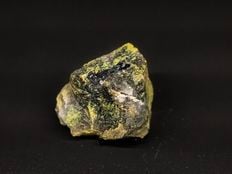
The global race for dominance in the rapid deployment of artificial intelligence (AI) goes beyond building the most accurate platform. It also involves a high-stakes competition for physical resources, which includes rare earth elements.
As nations and corporations alike scramble to build AI infrastructure, rare earth elements have become foundational pillars of this technological revolution. From the neodymium magnets powering massive data storage drives to the cerium oxide required for precision semiconductor manufacturing, these elements are essential for building out the AI ecosystem.
See more: How China’s Rare Earths Dominance Reshapes Defense Strategy
Meeting AI's Power Demands
While AI can bring operational efficiencies, they can’t be realized unless the technology’s power requirements are met. The massive electricity loads generated by AI servers are driving a surge in energy demand, necessitating the buildout of both renewables and base-load sources like nuclear power. That said, rare earths are vital to these solutions. They are used to manufacture critical components of wind turbine magnets, and elements like gadolinium, dysprosium, and europium are indispensable for nuclear fuel performance and reactor control.
Furthermore, while AI continues to evolve at a breakneck pace, the geopolitical and economic implications of rare earth supply chains will only intensify. For investors, exposure to companies involved in the exploration, mining, and production of rare earths presents an explosive growth opportunity.
Exposure Outside of China
Given the aforementioned factors, investors will want to consider exposure to the Sprott Rare Earths Ex-China ETF (REXC). REXC tracks the Nasdaq Sprott Rare Earths Ex-China Index (NSREXC), which offers investors a targeted way to capitalize on reworking the global mineral supply chain by avoiding companies domiciled in China.
Why focus on companies outside of China? Historically, China has held a controlling interest in rare earth mining, processing, and refining capacity. In essence, this creates a monopolistic stranglehold on supply, which translates to greater risk as trade friction or export restrictions from Western sanctions can disrupt global supply chains for high-tech industries located outside of China.
By investing in the companies involved in the production and processing of critical materials, REXC aligns with the urgent need to secure supply chains for the AI era. More importantly, it accomplishes these investment objectives without the added geopolitical risk.
By removing China exposure, REXC seeks to mitigate the risk from geopolitical uncertainty and regulatory shifts. REXC provides a tactical tool for investors who believe that the future of energy independence hinges on a supply chain that begins and ends outside of Chinese borders.
For the latest standardized performance and holdings of Sprott Rare Earths Ex-China ETF, please visit REXC. Past performance is no guarantee of future results.
For more news, information, and analysis, visit the Gold/Silver/Critical Minerals Content Hub.
Disclosures
An investor should consider the investment objectives, risks, charges, and expenses carefully before investing. To obtain a Prospectus, which contains this and other information, contact your financial professional or call 888.622.1813. Read the Prospectus carefully before investing, which can also be found by clicking one of the links below.
Past performance is no guarantee of future results. One cannot invest directly in an index.
Funds that emphasize investments in small/mid-cap companies will generally experience greater price volatility. Diversification does not eliminate the risk of investment losses. ETFs are considered to have continuous liquidity because they allow an individual to trade throughout the day. A higher portfolio turnover rate may indicate higher transaction costs and may result in higher taxes when Fund shares are held in a taxable account. These costs, which are not reflected in annual fund operating expenses, affect the Fund’s performance.
Sprott Asset Management USA, Inc. is the Investment Adviser to the ETFs. ALPS Distributors, Inc. is the Distributor for the ETFs and is a registered broker-dealer and FINRA Member. ALPS Distributors, Inc. is not affiliated with Sprott Asset Management USA, Inc. or VettaFi.
Exchange Traded Funds (ETFs): SETM, LITP, URNM, URN, COPP, COPJ, NIKL, SGDM, SGDJ, SLVR, GBUG, METL
Physical Bullion Funds: PHYS, PSLV, CEF, and SPPP.
Gold and precious metals are referred to with terms of art like store of value, safe haven and safe asset. These terms should not be construed to guarantee any form of investment safety. While “safe” assets like gold, Treasuries, money market funds and cash generally do not carry a high risk of loss relative to other asset classes, any asset may lose value, which may involve the complete loss of invested principal.

