


Realizing the importance of critical minerals to meet future energy demands, the White House has made strategic investments in certain companies.
With the proliferation of technological advancements like AI, the need for base metals is necessary to create the infrastructure hardware like aluminum and steel. Additionally, the heavy demand for electricity to power these applications will require metals like copper and silver. These have strong electrical conductivity properties.
Unprecedented Demand
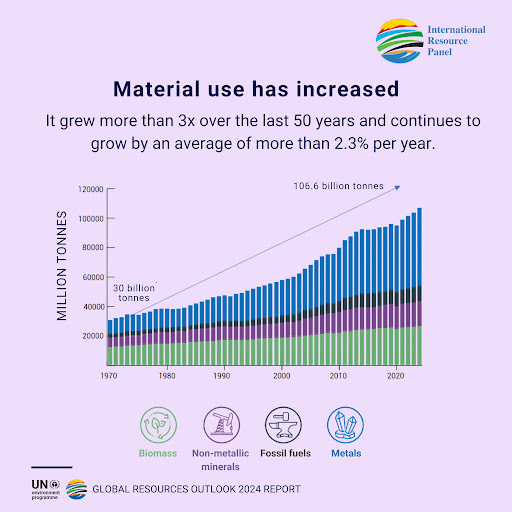
The World Economic Forum noted material use has increased exponentially over the past 50 years, which includes metals. The unprecedented demand could potentially lead to disrupted supply chains in the future. That makes the White House investment stakes more crucial.
“Global natural resource consumption [may] increase by 60% by 2060, compared with 2020 levels,” the World Economic Forum noted. It cited a 2024 United Nations Environment Programme’s Global Resources Outlook report.
1 Fund for Critical Minerals Exposure
Investors can also position themselves to capture potential upside in companies poised to benefit from critical minerals demand. Investors could conduct their own research and building a portfolio of individual stocks. But an easier path to exposure would be via an ETF like the Sprott Critical Materials ETF (SETM ).
The fund tracks the Nasdaq Sprott Critical Materials Index. It includes global constituents strategically positioned to capture growth in companies operating within the critical minerals space. Constituents within the index include mining companies necessary for the production of uranium, lithium, copper, nickel, silver, manganese, cobalt, graphite, and other rare earth elements.
Other Exposure Options
Investors can also target their exposure to specific metals that can capture the aforementioned growth. For example, the Sprott Physical Silver Trust (PSLV ) can be used for silver’s electrical conductivity properties. The Sprott Lithium Miners ETF (LITP ) can be used for lithium’s usage in applications requiring lithium-ion batteries, like EVs.
Investors can also opt for an actively managed ETF with broad metals exposure. More specifically, consider the Sprott Active Metals & Miners ETF (METL ).
Broader Mandate
“METL is the only ETF that provides active exposure to miners of a diverse group of metals,” said Schoffstall, director of ETF product management at Sprott Asset management. “Not only do those metals include critical materials, but it also has exposure to things like steel, platinum, palladium, and has a broader mandate to invest in more diversified metals.”
For more news, information, and analysis, visit the Gold/Silver/Critical Minerals Content Hub.
The Sprott Physical Silver Trust is generally exposed to multiple risks that have been both identified and described in the Prospectus. Please refer to the Prospectus for a description of these risks. This material must be preceded or accompanied by a prospectus. For an additional copy of the prospectus please visit https://sprott.com/investment-strategies/physical-bullion-trusts/silver/.
An investor should consider the investment objectives, risks, charges, and expenses carefully before investing. To obtain a Prospectus, which contains this and other information, contact your financial professional or call 888.622.1813. Read the Prospectus carefully before investing, which can also be found by clicking one of the links below.
Past performance is no guarantee of future results. One cannot invest directly in an index.
Funds that emphasize investments in small/mid-cap companies will generally experience greater price volatility. Diversification does not eliminate the risk of investment losses. ETFs are considered to have continuous liquidity because they allow an individual to trade throughout the day. A higher portfolio turnover rate may indicate higher transaction costs and may result in higher taxes when Fund shares are held in a taxable account. These costs, which are not reflected in annual fund operating expenses, affect the Fund’s performance.
Sprott Asset Management USA, Inc. is the Investment Adviser to the ETFs. ALPS Distributors, Inc. is the Distributor for the ETFs and is a registered broker-dealer and FINRA Member. ALPS Distributors, Inc. is not affiliated with Sprott Asset Management USA, Inc. or VettaFi.
Exchange Traded Funds (ETFs): SETM, LITP, URNM, URN, COPP, COPJ, NIKL, SGDM, SGDJ, SLVR, GBUG, METL
Physical Bullion Funds: PHYS, PSLV, CEF, and SPPP.
Gold and precious metals are referred to with terms of art like store of value, safe haven and safe asset. These terms should not be construed to guarantee any form of investment safety. While “safe” assets like gold, Treasuries, money market funds and cash generally do not carry a high risk of loss relative to other asset classes, any asset may lose value, which may involve the complete loss of invested principal.

