

ETFdb Logo
  • ETF Database
  • Content Hubs
    • Themes
      • Active ETF
      • Alternatives
      • Artificial Intelligence
      • China Insights
      • Core Strategies
      • Crypto
      • Disruptive Technology
      • Energy Infrastructure
      • ETF Building Blocks
      • ETF Investing
      • ETF Strategist
      • Financial Literacy
      • Fixed Income
      • Free Cash Flow
      • Future ETFs
      • Innovative ETFs
      • Institutional Income Strategies
      • Leveraged & Inverse
      • Market Insights
      • Market Outlooks
      • Modern Alpha
      • Nuclear Energy
      • Portfolio Strategies
      • Sector Investing
      • Tax Efficient Income
      • Thematic Investing
    • Asset Class
      • Equity
        • U.S. Equity
        • Int'l Developed
        • Emerging Market Equities
      • Alternatives
        • Gold/Silver/Critical Materials
        • Cryptocurrency
        • Currency
        • Volatility
      • Fixed Income
        • Investment Grade Corporates
        • US Treasuries & TIPS
        • High Yield Corporates
        • Int'l Fixed Income
    • ETF Ecosystem
    • ETFs in Canada
    • Crypto ETF Hub
  • Tools
    • ETF Screener
    • ETF Country Exposure Tool
    • ETF Database Categories
    • Indexes
    • Scenario Analysis
    • Watchlists
    • Head-To-Head ETF Comparison Tool
    • Mutual Fund To ETF Converter
    • ETF Stock Exposure Tool
    • ETF Issuer Fund Flows
  • Research
    • ETF Education
    • Equity Investing
    • Dividend ETFs
    • Leveraged ETFs
    • Inverse ETFs
    • Index Education
    • Index Insights
    • Top ETF Sectors
    • Top ETF Issuers
    • Top ETF Industries
  • Webcasts
  • Sectors
    • Sector Investing Content Hub
    • XLK
    • XLI
    • XLU
    • XLY
    • XLP
    • XLRE
    • Sector Power Rankings
    • XLE
    • XLC
    • XLF
    • XLV
    • XLB
  • Multimedia
    • ETF 360 Video Series
    • ETF of the Week Podcast
    • Gaining Perspective Podcast
    • ETF Prime Podcast
    • Video
  • Company
    • About VettaFi
  • PRO
    • Pro Content
    • Pro Tools
    • Advanced
    • FAQ
    • Free sign up
    • Login
  1. Innovative ETFs Content Hub
  2. Don’t Be Fooled by This Fund’s Outsized Expense Ratio
Innovative ETFs Content Hub
Share

Don't Be Fooled by This Fund's Outsized Expense Ratio

Ben HernandezMar 30, 2021
2021-03-30

When screening for ETFs solely on cost, sometimes the numbers don’t tell the whole story. The Invesco KBW High Dividend Yield Financial ETF (KBWD B-) is precisely one of those funds.

That’s because its 1.24% expense ratio hides the fact that it actually includes operating expenses tied to private equity holdings. It’s one example where an ETF advisor or investor can get lost in the numbers and not know the truth until they peel back the layers.

“The fund’s eye-popping fee is a regulatory illusion. It’s required to report the operating expenses of its private equity holdings as part of its expense ratio. Real-world holding costs have been consistently in line with KBWD’s very reasonable management fee” of 0.35%. The ETF focuses on real-estate investment trusts, as well as private-equity funds," FactSet noted in a MarketWatch article that included the 10 highest-yielding dividend stock ETFs.
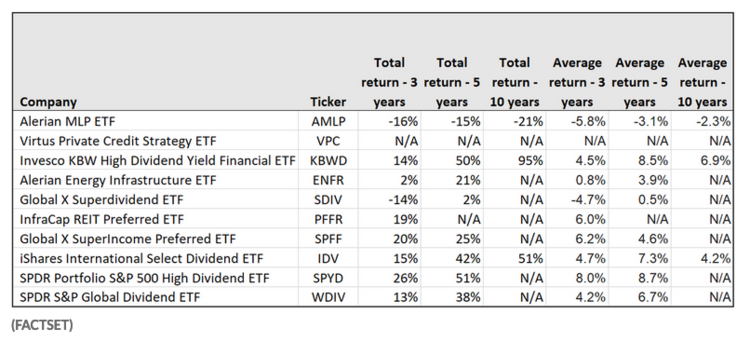
FactSet ETF Figures

An Income Diversification Tool

In the current low yield environment, KBWD is the perfect opportunity for fixed income investors to diversify their portfolios and chase higher yields. However, the fund isn’t for the faint of heart.

KBWD is based on the KBW Nasdaq Financial Sector Dividend Yield Index (Index). The Fund generally will invest at least 90% of its total assets in the securities of publicly listed financial companies with competitive dividend yields, in the United States and that comprise the Index.

“This ETF is one of the more unique offerings in the financial sector, as KBWD offers a way to access banks and other institutions that pay out attractive dividend yields,” an ETF Database analysis suggested. “KBWD is definitely a risky bet, as the underlying companies generally include the less stable financial institutions that aren’t necessarily on strong fiscal footing.”

As mentioned, one needs a cast-iron stomach before investing in KBWD.

“As such, this fund probably isn’t appropriate for those with a low risk tolerance and the hyper-targeted nature diminishes the appeal to those constructing a balanced portfolio for the long run,” the analysis said further. “But for those seeking to tilt towards dividend paying stocks and enhance the current return generated from the equity side of a portfolio, KBWD can be a very attractive option, as the effective dividend yield may be in excess of 10%.”

Content continues below advertisement

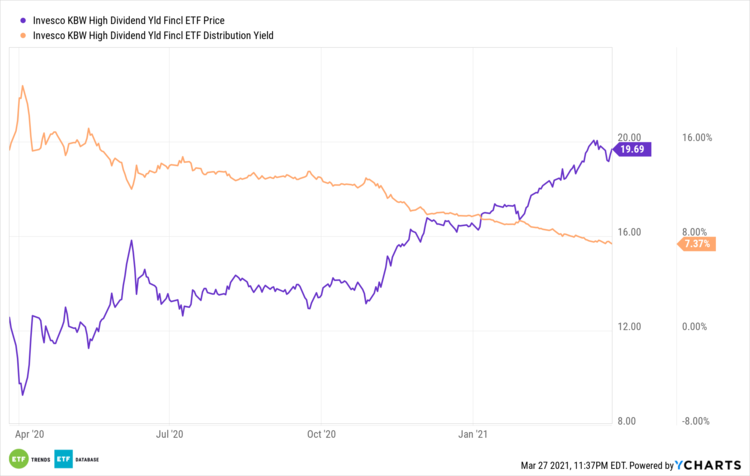
KBWD Performance Figures

For more news and information, visit the Innovative ETFs Channel.

Loading Articles...

Advertisement

Is Your Portfolio Positioned With Enough Global Exposure?

ETF Education Channel

How to Allocate Commodities in Portfolios

Tom LydonApr 26, 2022
2022-04-26

A long-running debate in asset allocation circles is how much of a portfolio an investor should...

Core Strategies Channel

Why ETFs Experience Limit Up/Down Protections

Karrie GordonMay 13, 2022
2022-05-13

In a digital age where information moves in milliseconds and millions of participants can transact...

}
X
