


South Korea managed to avoid a technical recession recently, which could keep bullish winds in the sails of South Korea ETFs. These include the Direxion Daily South Korea Bull 3X Shares (KORU).
Analysts polled by Reuters were expecting a 0.5% GDP growth figure, but the economy expanded by 0.6% in the second quarter. This comes after South Korea saws its economy contract by 0.2% during the previous quarter. The Q2 figure represents the fastest GDP growth since the first quarter of last year, and in the grand scheme of things, ended what the Korean Economic Daily called “a prolonged stretch of anemic growth.”
“Net exports were the principal driver of growth,” said Louise Loo, Head of Asia Economics at Oxford Economics, which was supported by data from the Bank of Korea showing that exports for goods and services rose 4.2% during Q2.
Furthermore, Reuters noted that consumer spending is on the rise. The Bank of Korea is mulling over interest rate cuts, which could give the economy a further boost though tariffs continue to remain a wild card.
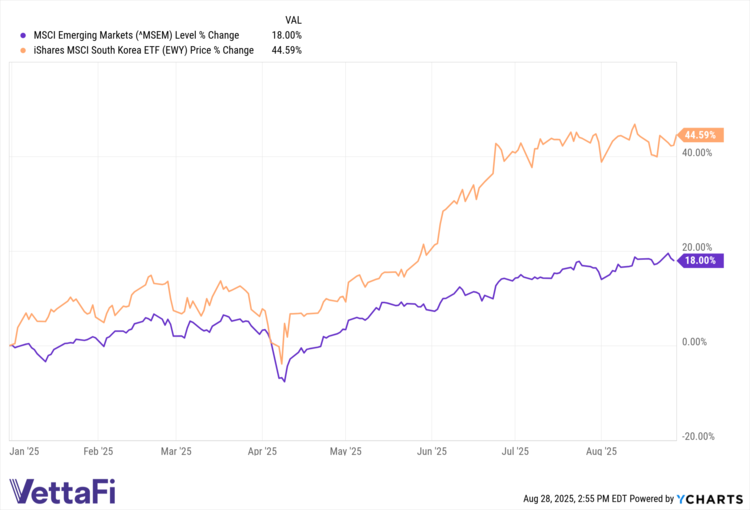
The outperformance of South Korea is apparent when you placed a comparable ETF, the iShares MSCI South Korea ETF (EWY), next to the broad MSCI Emerging Markets Index. The ETF lags the broader index in the year-to-date frame, but in the last six months, the fund is outpacing the broad index tremendously.
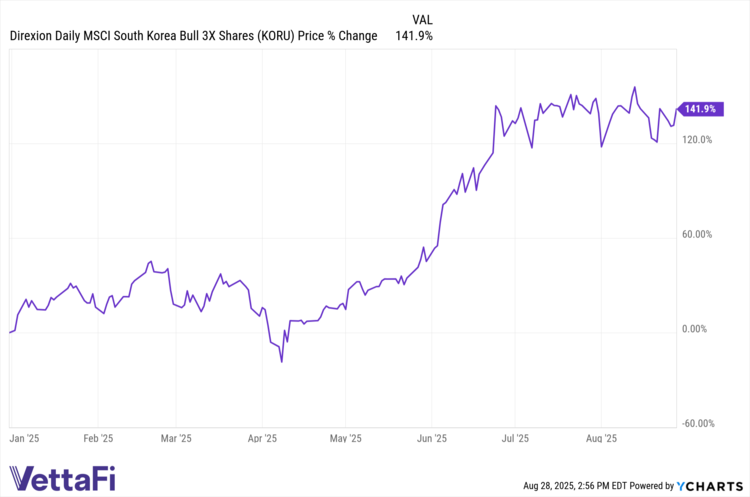
Direxion Daily South Korea Bull 3X Shares: Up, Up, & Away
KORU tracks the the performance of the MSCI Korea 25/50 Index, but turns up the wick to 300% exposure. As such, it’s been pushing above the 140% year-to-gain marker so far this year. The index primarily tracks large- and mid-cap segments of the South Korean equity market.
Samsung Electronics comprises a majority of the holdings in KORU, accounting for almost 20% of its allocation as of June 30. In its most recent earnings report, the electronics company delivered better-than-estimated revenue, but missed on operating profit. A slump in its chip business was the culprit, but management remains optimistic despite uncertainty surrounding trade policies. They anticipate a rebound in the IT industry, citing persistent demand for AI and robotics.
“In this context, we anticipate a rebound in our performance in the second half, following a bottoming out in the second quarter, with the earnings expected to improve steadily as the year progresses,” the company noted in a statement.
For more news, information, and analysis, visit the Leveraged & Inverse Content Hub.

