
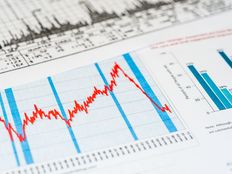
The DJIA posted its worst opening day performance in over eight decades as it kicked off the first trading day of 2016; the S&P 500 and Nasdaq Composite followed suite with record-worthy plunges of their own as both posted the worst start to the year since 2001.
Magnified selling pressures in China combined with heightened geopolitical tensions in the Middle East were enough to set up U.S. investors for one of the ugliest stock market openings in recent memory.
Why Are Market Historians So Worried?
Just how bad was the opening bell scene on Wall Street? Consider the following table summarizing new year opening day returns for (SPY ) from Bespoke:

In summary, it was one of the worst openings in recent memory.
A sharp one-day drop in the market is reason enough to worry and whip out the bear market history books; and when that one day happens to be the first trading session of the new year, the fear is only amplified.
The negative price action on the day was showcased by media outlets which were quick to point to the January Barometer – this is the notion that as goes January, so does the rest of the year. A weak January means a weak rest of the year and vice versa. Based on this belief, this means that equity indexes will now have to work hard just to break even, let alone hope to churn a gain, before the end of the month.
What’s Behind the Drop? Not Much.
Here are what were cited as the reasons behind Monday’s hangover of a trading session:
- China Stumbles, Again: A weak manufacturing data release in China prompted selling pressures overseas, which in turn triggered a circuit breaker system that halted trading for the rest of the session.
- More Uncertainty in the Middle East: Saudi Arabia cut ties with Iran over the weekend following an embassy attack in Tehran. This in turn caused a spike in oil prices, although the rally was short-lived. The volatility did, however, cast a negative tone at the end of the day.
- Sluggish Data at Home: In domestic news, the ISM manufacturing index came in lower-than-expected; the index slipped to 48.2, remaining in contractionary territory.
None of the reasons behind the sell-off are anything new in the broad market narrative at hand. That is to say, China has been a real stinker for a while now and tensions in the Middle East have remained elevated. Lastly, while domestic manufacturing data may be discouraging, it is far from terrible.
How Much Should You Worry?
When considering all of the above, don’t lose sight of your own tendency to succumb to confirmation bias, that is, the tendency to listen only to information that supports your preconceptions. For example, if you were feeling bearish about the stock market in Q4 2015, then the “horrific” start to 2016 is only more fuel for your fire. The takeaway here is to try harder to keep an open mind when you’re doing your own research.
Read more about How to Battle Your Investing Biases.
To answer the above-posed question in the heading – if you weren’t worried about a major market meltdown in the final months of 2015, then the rocky start to 2016 alone is not a good enough reason to prompt any major shifts in your portfolio.
Ways to Play
The return of volatility has been a blessing for nimble traders and a curse for the bulls. Those looking to play some of the major moves highlighted in this article can start their product selection process here:
- Dow Jones Industrial Average ETFs.
- S&P 500 ETFs.
- Nasdaq-100 ETFs.
- China Equities ETFs.
- Volatility ETPs.
For an even wider selection, including leveraged and inverse funds, be sure to consult the ETF Trading Cheat Sheet.
The Bottom Line
The sharp drop seen on January 4, 2016 appears to be a case of profit taking more than major portfolio rebalancing on the part of investors. More importantly, the recent rout we’ve seen does not yet appear to be rooted in any fundamental changes to the biggest price drivers at hand, which remain accommodative monetary policy and positive growth indicators.
In any case, active investors and traders may want to tighten up stop orders in light of the heightened volatility. Be sure to also take careful note of how the major indexes behave as they attempt to rebound and approach former resistance levels.
Follow me @SBojinov

