


Despite obstinate inflation and higher-for-longer interest rates, consumers continue to open their wallets and spend. But how they spend is another story. While physical stores struggle with rising operational costs, consumers are doubling down on digital channels.
To capture this massive tailwind via retail ETFs, many investors default to buying market-cap-weighted indexes, which inevitably leaves them over-concentrated in a small handful of large-cap giants dominating the retail sector. For a more balanced, high-conviction route, the Amplify Online Retail ETF (IBUY ) offers a highly diversified, global approach that turns online retail expansion into an investable opportunity.
Key Takeaways:
- U.S. e-commerce sales reached a record $326.7 billion in the first quarter, outperforming the growth of the broader retail market.
- The Amplify Online Retail ETF (IBUY ) bypasses traditional market-cap weighting to prevent a handful of mega-caps from dominating the portfolio.
- By using a modified equal-weighting structure, the fund balances exposure across global travel, marketplace, and omnichannel retail innovators.
E-Commerce Outpacing Broader Retail Market
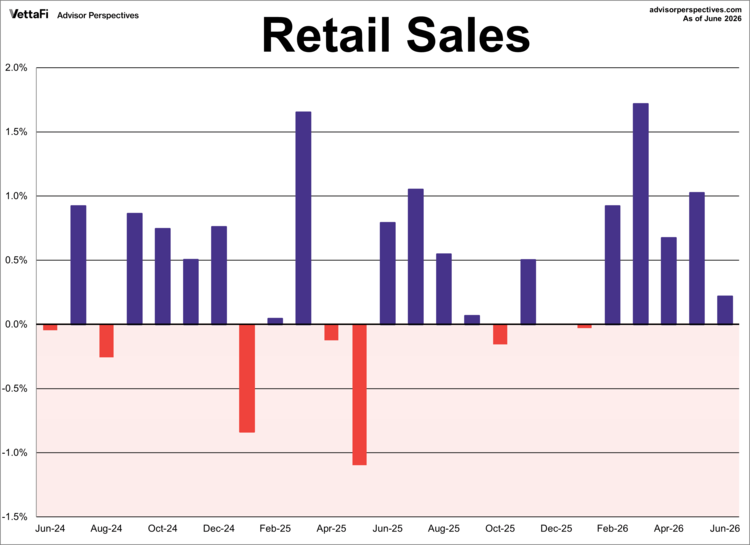
The latest data from TMX VettaFi economic and financial market research analyst Jen Nash paints a clear picture highlighting retail growth despite macro headwinds affecting consumers. According to the Census Bureau’s Advance Retail Sales Report, consumer spending notched its fifth straight consecutive monthly gain, with headline sales ticking up 0.2% in June.
Zooming out to the quarterly horizon reveals even stronger structural momentum. The Census Bureau’s Q1 2026 report announced that seasonally adjusted U.S. e-commerce sales reached a record $326.7 billion. This represents a robust 2.7% increase from the prior quarter and an impressive 9.8% surge year over year. In comparison, overall retail sales only grew 3.9% over the same period. The data proves a clear trend: online retail continues to win U.S. market share.
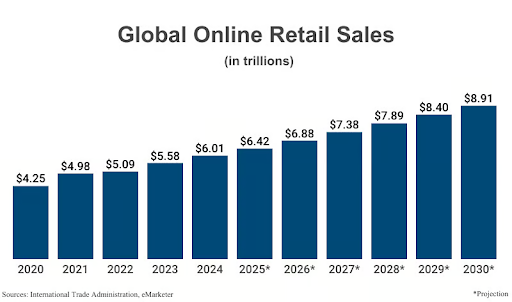
The global outlook for retail sales is equally compelling. Industry data from Capital One reveals that worldwide online shopping generated $6.42 trillion in revenue in 2025, and is projected to scale beyond $8.9 trillion by 2030. With global online transactions expected to climb at an average annual rate of 6.79% through 2030, digital marketplaces are cementing their place as the primary storefront of the global economy.
Midyear Spikes and Omnichannel Momentum
A real-world example of this modern digital spending power occurred during Amazon’s shifted Prime Day event in late June. Over just a four-day span, U.S. online spending surged 9.3% year over year to $26.4 billion.
Notably, other retail competitors like Target and Walmart capitalized on the momentum by launching their own highly promotional, competing events. This collective shopping push created a major midyear spending spike that collectively boosted the digital ecosystem. Consumers are using these promotional windows to upgrade to more expensive products, particularly in electronics, home goods, and toys.
All of these retail tailwinds create a compelling opportunity for IBUY.
See More: IBUY’s 10-Year Anniversary Marks Decade-Long Journey in Online Retail
Underneath the hood of IBUY is the EQM Online Retail Index. Its methodology consists of screening for global opportunities in publicly-traded companies that derive a sizeable portion of their revenues from online retail transactions. This index features a diversified mix across four core segments that include traditional online retail, online travel, online marketplaces, and omnichannel retail.
As mentioned, IBUY frees investors from the constraints of typical market-cap weighting that systematically forces a fund to put the vast majority of its assets into a single dominant player like Amazon. IBUY utilizes a modified equal-weighting methodology, which keeps the portfolio diversified across all market cap sizes and geographic regions. Alongside household retail names like Amazon, the top holdings (as of July 16, 2026) includes other companies pertinent to the online retail footprint such as Wayfair, Hims & Hers Health Inc, Etsy, TripAdvisor, and others.
By spreading capital allocations evenly, IBUY ensures that investors aren’t just exposed to established giants. Instead, they gain meaningful exposure to the innovative mid- and small-cap companies that are quietly capturing market share, which provides direct exposure to the next great compounding success stories in global retail.
For more news, information, and analysis, visit the Thematic Investing Content Hub.
vettafi.com owned by VettaFi LLC (“VettaFi”). VettaFi is the index provider for IBUY, for which it receives an index licensing fee. However, IBUY is not issued, sponsored, endorsed, or sold by VettaFi, and VettaFi has no obligation or liability in connection with the issuance, administration, marketing, or trading of IBUY.

