


Investors now have more optionality when looking for Nasdaq 100 exposure. State Street Investment Management (SSIM) just launched the State Street SPDR Portfolio Nasdaq 100 ETF (QNDX). It will invariably go heads up with the Qs, namely the Invesco QQQ ETF (QQQ ) and the Invesco NASDAQ 100 ETF (QQQM ).
Key Takeaways:
- State Street launched the SPDR Portfolio Nasdaq 100 ETF (QNDX) to directly compete with Invesco’s dominant “Qs” suite.
- At a 0.10% expense ratio, QNDX outprices rivals by five basis points against QQQM and eight basis points against QQQ.
- The ultra-low fee structure aims to capture budget-conscious traders and long-term investors seeking foundational large-cap growth exposure.
See More: State Street Tech Sector ETF XLK Passes $100 Billion in AUM
A Tech Tilt at a Low Cost
In a crowded ETF marketplace, one of the ways to stay competitive is through fee compression. QNDX comes with a 0.10% expense ratio attached. That’s eight basis points less than QQQ, and five basis points less than QQQM. This certainly gives investors a reason to look closer at QNDX, as opposed to the Qs.
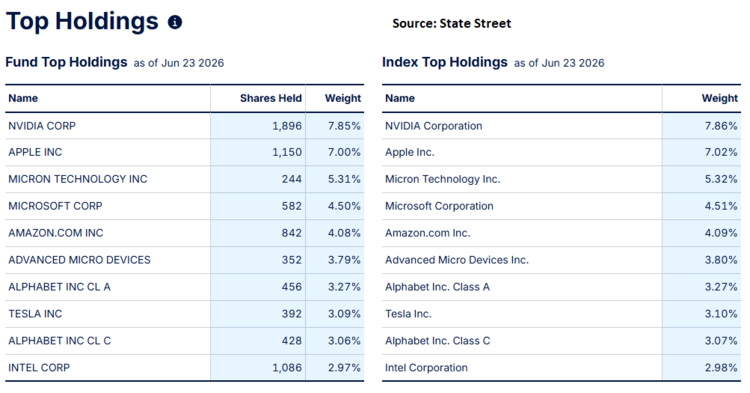
The Nasdaq 100 has been the prime choice for investors looking to get exposure to the index’s largest companies. In fact, it’s home to the largest companies, period. Nine of the 10 biggest reside in the index. Although known for its heavy technology exposure, it also has consumer discretionary and healthcare, among others.
“We’re excited to expand our partnership with State Street Investment Management through the launch of QNDX,” said Emily Spurling, global head of index at Nasdaq. “The Nasdaq-100 is one of the most widely recognized benchmarks globally and home to many of the most influential companies shaping the modern economy. We’re pleased to see expanded access to the large-cap innovation and growth that define the Nasdaq-100.”
Long- and Short-Term Appeal
For SSIM, this bolsters a lineup that’s best known for sector-specific ETFs. For prospective tech investors, the firm already has the State Street Technology Select Sector SPDR ETF (XLK ) offered at an expense ratio of eight basis points. However, it dips into a larger pool of equities by tracking the S&P 500, as opposed to QNDX, which targets the heavy hitters with its Nasdaq 100 focus.
At 10 basis points, QNDX could certainly appeal to both long- and short-term investors alike. With regard to the latter, QQQ is already a trader’s ETF, with consistently heavy daily volume. An alternative with a lower expense ratio could certainly add to trader appeal. And, again, it could attract investors with an eye for long-term growth exposure.
“Investors today are looking for efficiency at the core of their portfolios without sacrificing growth potential,” said Anna Paglia, chief business officer at State Street Investment Management. “QNDX has been built with this need in mind, combining low cost with exposure to many of the market’s largest and most established growth companies, which may make it a compelling core allocation rather than a tactical position.”
For more news, information, and analysis, visit the ETF Strategist Content Hub.

