
ETFdb Logo
  • ETF Database
  • Content Hubs
    • Themes
      • Active ETF
      • Alternatives
      • Artificial Intelligence
      • China Insights
      • Core Strategies
      • Crypto
      • Disruptive Technology
      • Energy Infrastructure
      • ETF Building Blocks
      • ETF Investing
      • ETF Strategist
      • Financial Literacy
      • Fixed Income
      • Free Cash Flow
      • Future ETFs
      • Innovative ETFs
      • Institutional Income Strategies
      • Leveraged & Inverse
      • Market Insights
      • Market Outlooks
      • Modern Alpha
      • Nuclear Energy
      • Portfolio Strategies
      • Sector Investing
      • Tax Efficient Income
      • Thematic Investing
    • Asset Class
      • Equity
        • U.S. Equity
        • Int'l Developed
        • Emerging Market Equities
      • Alternatives
        • Gold/Silver/Critical Materials
        • Cryptocurrency
        • Currency
        • Volatility
      • Fixed Income
        • Investment Grade Corporates
        • US Treasuries & TIPS
        • High Yield Corporates
        • Int'l Fixed Income
    • ETF Ecosystem
    • ETFs in Canada
    • Crypto ETF Hub
  • Tools
    • ETF Screener
    • ETF Country Exposure Tool
    • ETF Database Categories
    • Indexes
    • Scenario Analysis
    • Watchlists
    • Head-To-Head ETF Comparison Tool
    • Mutual Fund To ETF Converter
    • ETF Stock Exposure Tool
    • ETF Issuer Fund Flows
  • Research
    • ETF Education
    • Equity Investing
    • Dividend ETFs
    • Leveraged ETFs
    • Inverse ETFs
    • Index Education
    • Index Insights
    • Top ETF Sectors
    • Top ETF Issuers
    • Top ETF Industries
  • Webcasts
  • Sectors
    • Sector Investing Content Hub
    • XLK
    • XLI
    • XLU
    • XLY
    • XLP
    • XLRE
    • Sector Power Rankings
    • XLE
    • XLC
    • XLF
    • XLV
    • XLB
  • Multimedia
    • ETF 360 Video Series
    • ETF of the Week Podcast
    • Gaining Perspective Podcast
    • ETF Prime Podcast
    • Video
  • Company
    • About VettaFi
  • PRO
    • Pro Content
    • Pro Tools
    • Advanced
    • FAQ
    • Free sign up
    • Login
  1. Multi-Asset Content Hub
  2. Even in a Low-Rate Environment, Bond Laddering Helps
Multi-Asset Content Hub
Share

Even in a Low-Rate Environment, Bond Laddering Helps

Ben HernandezApr 02, 2020
2020-04-02

The current low-yield environment is certainly putting a strain on fixed income investors who are trying to squeeze out the most yield in this challenging market landscape. With more investors seeking the safety of bonds, it’s putting downward pressure on yields, but a bond laddering strategy can help.

Invesco’s website offers a primer on bond laddering for investors looking to utilize the strategy.

“Bond laddering is a simple strategy that is commonly deployed by fixed income investors,” an Invesco article said. “A laddered portfolio consists of bonds with varying terms to maturity, often with a consistent period of time between each maturity. By creating such a portfolio, an investor will have bonds maturing periodically, allowing the proceeds to be reinvested into new bonds, held as cash in the account, or invested into some other instrument.”

Invesco offers a BulletShares suite that allows fixed income investors to use the bond laddering strategy and apply them to exchange-traded funds (ETFs).

“Creating a bond ladder with BulletShares ETFs can help mitigate these potential problems,” the article noted. “The securities in the BulletShares ETFs have all been subjected to institutional-level research scrutiny. Trade execution is facilitated by designated market makers, assuring a competitive and transparent price at any given time, and all of these ETFs hold a basket of individual issues, which helps diversify credit risk.”

Additionally, investors can combine long and short duration ETFs to create their own bond laddering strategy. For long duration, investors can use the iShares 20+ Year Treasury Bond ETF (TLT B-).

Advantages of adding TLT to your portfolio:

  • Exposure to long-term U.S. Treasury bonds
  • Targeted access to a specific segment of the U.S. Treasury market
  • Use to customize your exposure to Treasuries

As for the fund itself, TLT seeks to track the investment results of the ICE U.S. Treasury 20+ Year Bond Index. The underlying index measures the performance of public obligations of the U.S. Treasury that have a remaining maturity greater than or equal to twenty years.
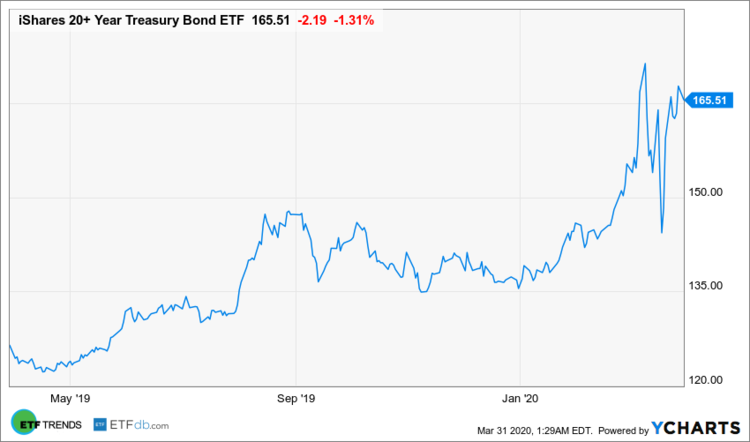
iShares 20+ Year Treasury Bond ETF

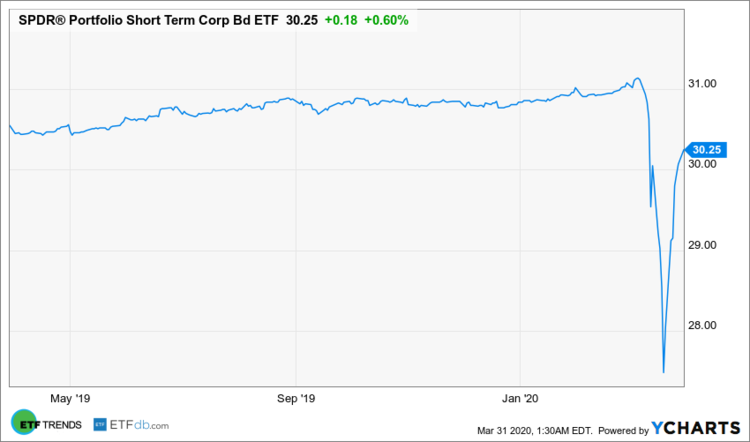
For the shorter duration, investors can use the *SPDR Portfolio Short Term Corp Bd ETF (SPSB)*, which seeks to provide investment results that correspond to the performance of the Bloomberg Barclays U.S. 1-3 Year Corporate Bond Index.

SPSB invests at least 80 percent of its total assets in securities designed to measure the performance of the short-termed U.S. corporate bond market. Ideally, shorter-term bond issues with maturities of three to four years are ideal to minimize duration exposure should the bull market enter a correction phase.

Content continues below advertisement

SPDR Portfolio Short Term Corp

This article originally appeared on ETFTrends.com.

Loading Articles...

Advertisement

Is Your Portfolio Positioned With Enough Global Exposure?

ETF Education Channel

How to Allocate Commodities in Portfolios

Tom LydonApr 26, 2022
2022-04-26

A long-running debate in asset allocation circles is how much of a portfolio an investor should...

Core Strategies Channel

Why ETFs Experience Limit Up/Down Protections

Karrie GordonMay 13, 2022
2022-05-13

In a digital age where information moves in milliseconds and millions of participants can transact...

}
X
