

While investors may look to the vaunted S&P 500 for broad-based equities exposure through associated ETFs like the SPDR S&P 500 ETF Trust (SPY ) or Vanguard S&P 500 ETF (VOO ), they might be seeking even further diversification that mitigates concentration risk. The launch of the Xtrackers S&P 500 Diversified Sector Weight ETF (SPXD) could be exactly what they’re looking for.
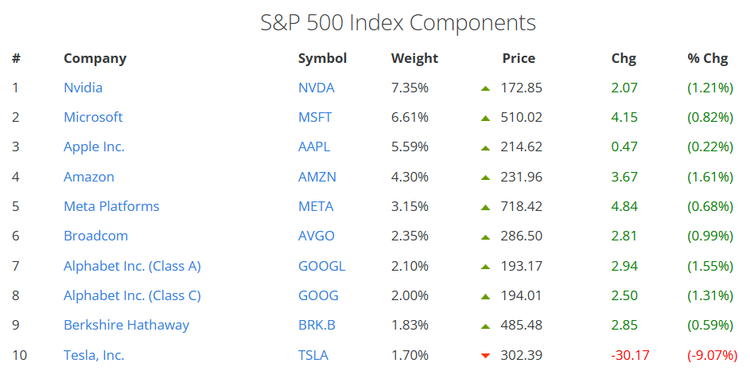
As currently constructed, the S&P 500’s top ten includes a list of familiar names — mostly big tech firms riding the wave of the hot artificial intelligence (AI) theme. It’s certainly a sign of the times, given the strength of the sector, but more discerning investors might be seeking more tailored exposure.
Mitigating Concentration Risk
The S&P could sway and move profoundly, given the concentration in names like Nvidia, Microsoft, Apple, and Amazon. This opens the door for investor exposure to that concentration risk, which could make them prone to violent swings in the market. Hence, the more diversified approach with SPXD.
The fund tracks the S&P 500 Diversified Sector Weight Index, and leverages the weighting approach employed by the Functional Information System (FIS ) framework developed by Syntax LLC. Rather than take an equal weight approach and allocate capital to specific stocks, SPXD specifically looks at sectors. From there, it uses a hierarchical weighting methodology, using a top to bottom approach that focuses on sub-sectors all the way down to business activities. The resulting weight given to the sector is ultimately determined by its revenue generation. As such, SPXD eschews chasing trends or stock hype, and is grounded in names associated with real business activity producing real results.
When looking at the fund’s current portfolio, the result is constituents that span across a variety of sectors. Investors will still see a skew towards information technology, but they also get sector exposure to industrials, financials, consumer staples, and others.
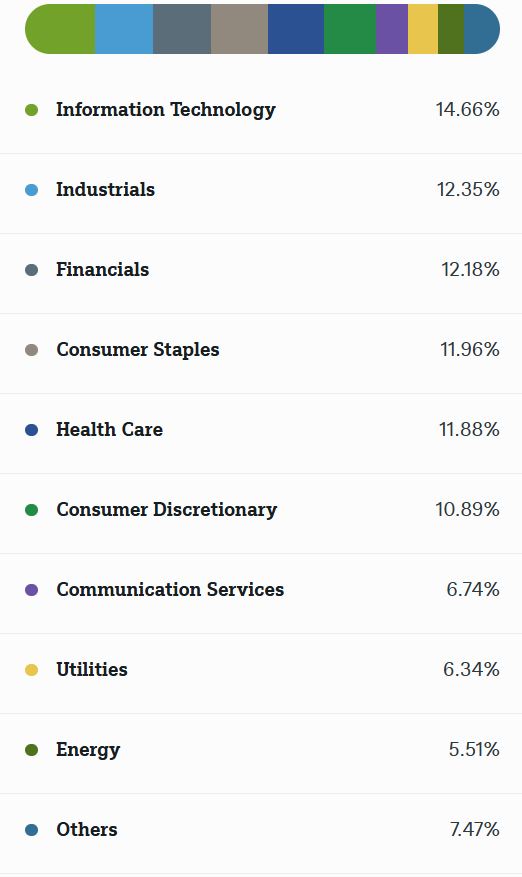
Diving further into its holdings, the largest allocation (as of July 23) is Berkshire Hathaway, at 3.69%, and then Jabil Inc with 1.71% and Abbott Laboratories with 1.68%. Obviously, this reflects no heavy weightings in the aforementioned big tech names. As such, the fund is less prone to heavy market fluctuations when volatility strikes.
“Investors are seeking allocation alternatives that avoid the concentration risks that we’re seeing in many large-cap benchmarks,” said Salvador Gomez, head of Xtrackers Sales Americas. “With SPXD, we’re offering a balanced exposure to the S&P 500 by rethinking sector classification and weighting — grounded in real business activity, not just labels.”
A Cost-Effective Option
In times of elevated inflation, seeking a low-cost option is still near the top of most investors’ lists. Given its diversified strategy versus the concentrated exposure of the S&P 500, it might seem the fund warrants more basis points. However, it carries the same expense ratio of 0.09% as SPY.
In times when the ETF industry is heading towards active management, SPXD’s passive approach sticks to simplicity, which also allows for the lower expense ratio. Rather than have portfolio managers constantly adjust holdings to suit market conditions, SPXD’s selective strategy allows its quality holdings do all the work for the fund.
For more news, information, and strategy, visit ETFdb.

