ETFdb Logo
  • ETF Database
  • Content Hubs
    • Themes
      • Active ETF
      • Alternatives
      • Artificial Intelligence
      • China Insights
      • Core Strategies
      • Crypto
      • Disruptive Technology
      • Energy Infrastructure
      • ETF Building Blocks
      • ETF Investing
      • ETF Strategist
      • Financial Literacy
      • Fixed Income
      • Free Cash Flow
      • Future ETFs
      • Innovative ETFs
      • Institutional Income Strategies
      • Leveraged & Inverse
      • Market Insights
      • Market Outlooks
      • Modern Alpha
      • Nuclear Energy
      • Portfolio Strategies
      • Sector Investing
      • Tax Efficient Income
      • Thematic Investing
    • Asset Class
      • Equity
        • U.S. Equity
        • Int'l Developed
        • Emerging Market Equities
      • Alternatives
        • Gold/Silver/Critical Materials
        • Cryptocurrency
        • Currency
        • Volatility
      • Fixed Income
        • Investment Grade Corporates
        • US Treasuries & TIPS
        • High Yield Corporates
        • Int'l Fixed Income
    • ETF Ecosystem
    • ETFs in Canada
    • Market Outlook
    • Crypto ETF Hub
  • Tools
    • ETF Screener
    • ETF Country Exposure Tool
    • ETF Database Categories
    • Indexes
    • Scenario Analysis
    • Watchlists
    • Head-To-Head ETF Comparison Tool
    • Mutual Fund To ETF Converter
    • ETF Stock Exposure Tool
    • ETF Issuer Fund Flows
  • Research
    • ETF Education
    • Equity Investing
    • Dividend ETFs
    • Leveraged ETFs
    • Inverse ETFs
    • Index Education
    • Index Insights
    • Top ETF Sectors
    • Top ETF Issuers
    • Top ETF Industries
  • Webcasts
  • Sectors
    • Sector Investing Content Hub
    • XLK
    • XLI
    • XLU
    • XLY
    • XLP
    • XLRE
    • Sector Power Rankings
    • XLE
    • XLC
    • XLF
    • XLV
    • XLB
  • Multimedia
    • ETF 360 Video Series
    • ETF of the Week Podcast
    • Gaining Perspective Podcast
    • ETF Prime Podcast
    • Video
  • Company
    • About VettaFi
  • PRO
    • Pro Content
    • Pro Tools
    • Advanced
    • FAQ
    • Free sign up
    • Login
  1. Index Insights
  2. If a Producer Goes Into Bankruptcy, How Will That Affect Midstream Contracts?
Index Insights
Share

If a Producer Goes Into Bankruptcy, How Will That Affect Midstream Contracts?

Karyl PatredisFeb 04, 2016
2016-02-04

If a producer goes into bankruptcy, how will that affect existing midstream contracts?

Middle school was generally an unflattering time for most of us. Acne, braces, bad hair styles, and ridiculous clothing choices riddle the pages of our mother’s photo albums. Luckily, it was just a rough patch.

It’s no secret that MLPs are in middle school right now. Investor concerns are at an all-time high and the Alerian inbox is stuffed fuller than a locker with a geek inside of emails worried about what 2016 will bring. While the idea that many MLP contracts have minimum volume commitments or are take-or-pay has helped MLP investors sleep at night for quite some time, concern over what could happen to “X” MLP if one of its largest upstream clients declares bankruptcy has come to the forefront in recent days.

Sadly, it’s a brutal time for upstream companies. Not only do they have acne and braces, they’re wearing Tommy Hilfiger polo shirts tucked into wind-pants with Dexters. With oil hovering around $30 a barrel, profits look much different than they did in 2014 when a barrel of oil was fetching over $100. This difficult environment has forced several upstream companies to file chapter 11 bankruptcy.

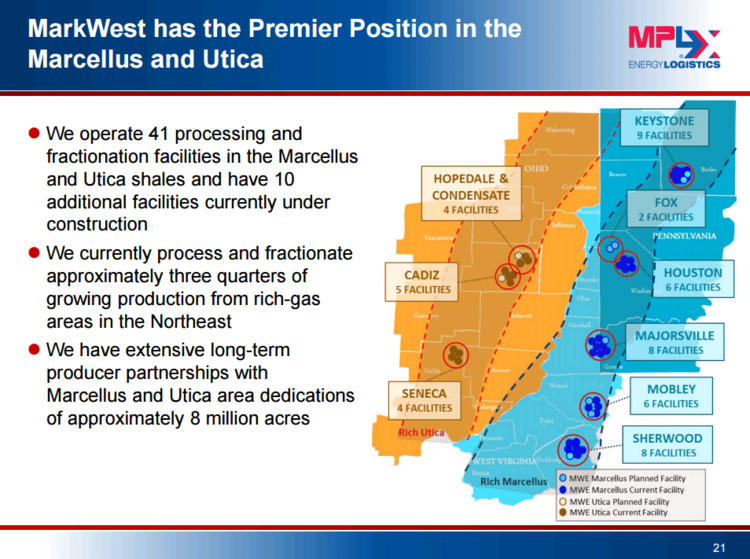
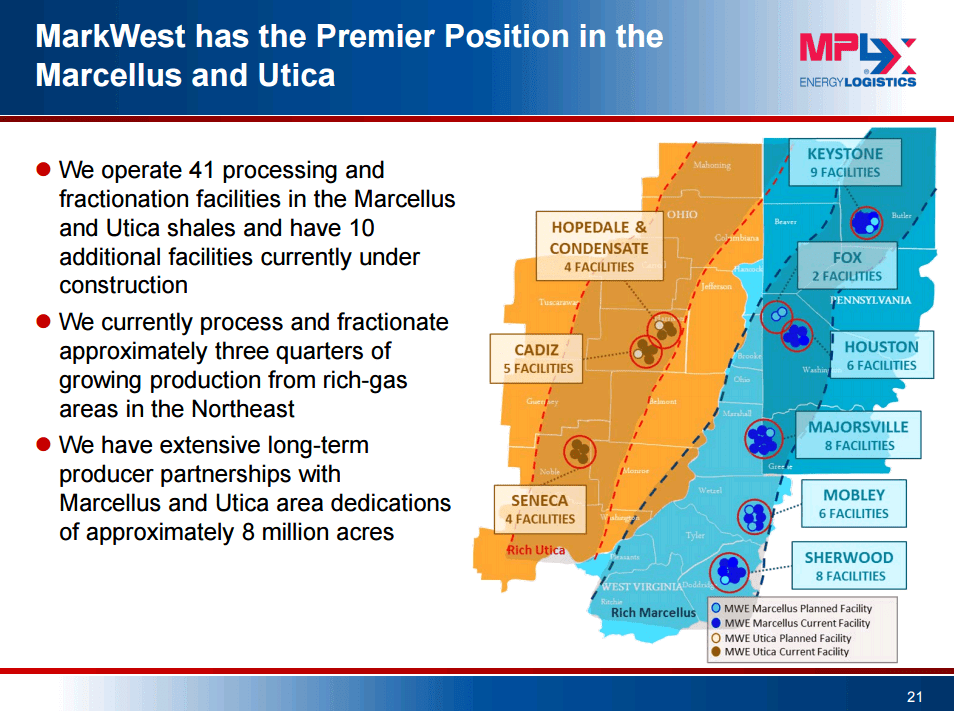
The term “chapter 11” is thrown around all the time, and to me, it’s always been synonymous with disaster. However, after learning a little more about it, it’s probably more correct to associate chapter 11 with the word restart. Chapter 11 is designed to protect the ongoing operations of the company and to maximize the value to the creditors. The goal in filing chapter 11 is to reorganize debt and to begin functioning as a healthy business again. For many upstream companies, a good relationship with their midstream provider is critical to reaching that goal, especially since many MLPs have a monopolistic footprint in their primary region of operation. Let’s look at MPLX LP (MPLX) for example. Three quarters of the growing production from rich-gas areas in the Marcellus and Utica is processed and fractionated by the company.

This is the image alt text

Because of monopolistic footprints such as these, midstream companies (and their contracts) may be considered critical vendors in bankruptcy court. If there are no other reasonable takeaway, storage, or gathering services in the area, midstream contracts and related business relationships will be of vital importance to avoid stranding production. Some analysts have noted that the closer an MLP’s operations are to the wellhead, the safer the contracts.

Understanding the types of contracts an MLP can hold is also important. Minimum volume commitment contracts dictate that an upstream company must pay a certain amount, regardless of throughput. In court, these contracts could face renegotiation to bring commitments more in line with current production. Take-or-pay contracts may also see adjustments. These contracts require upstream companies to pay for service even if they’re not using them. It is possible that take-or-pay agreements could be re-written to allow upstream companies to pay lower rates reflecting a more realistic picture of what they may actually “take”. Finally, it’s unlikely that above market contracts will stand as overpaying in this environment is difficult to justify in bankruptcy court. It could be reasonable, however, to assume agreements with rates similar to recently signed competitive contracts will not face renegotiation.

In a bankruptcy proceeding, upstream companies may be allowed to choose which contracts to follow through with, but there is no guarantee that the individual provisions within each can be adjusted. This means that renegotiation is not necessarily automatic. It may be wise, however, for a midstream company to renegotiate certain rates to assure profitability to both companies.

Note the amount of hedging words such as “could," “may,” and “no guarantee” I’ve used. I am not a bankruptcy attorney, but this is the feedback I’ve gathered from industry research. Additionally, it’s important to understand that contracts are private and confidential. Unfortunately, this means that investors cannot easily determine the types of contracts individual MLPs hold. They can, however, look at 10-Ks to better comprehend an MLPs exposure and customer diversity.

The main idea here is that it’s smart for everyone to play nice and work together to survive this difficult time. Just like in middle school, your fellow frizzy-haired brace-faces can make all the difference. If we can all just hold it together for a little longer, we’ll soon be on to better days.


Content continues below advertisement

» Popular Pages

  • Tickers
  • Articles

Jun 22

U.K. Nuclear: Scaling Up at Home & Abroad

Jun 22

Core Alpha, Mass Scale: How Capital Group Shifted the Active ETF Playbook

Jun 18

S&P 500 Snapshot: Peace Deal Overcomes Fed Jitters

Jun 18

Treasury Yields Snapshot: June 18, 2026

Jun 18

Volatility Protection & Income in a Dynamic Buffered ETF

Jun 18

Covered Call ETFs Have Boomed – But Can They Be More?

Jun 18

Dimensional Consolidates $250B Lineup Into ETF Share Classes

Jun 18

NUKZ Holding Constellation Injects Millions Into Local Economies

Jun 18

What Drives Active ETF Growth? NEOS and Thornburg Weigh In

Jun 18

Capital Rotation: A Breakdown of This Week's Top ETF Flows

QQQ

Invesco QQQ Trust Series I

VOO

Vanguard S&P 500 ETF

SMH

VanEck Semiconductor ETF

GLD

SPDR Gold Shares

SOXX

iShares Semiconductor ETF

DRAM

Roundhill Memory ETF

SCHD

Schwab US Dividend Equity ETF...

PPLT

abrdn Physical Platinum...

SOXL

Direxion Daily Semiconductor...

XLK

State Street Technology...

Loading Articles...

Advertisement

Is Your Portfolio Positioned With Enough Global Exposure?

ETF Education Channel

How to Allocate Commodities in Portfolios

Tom LydonApr 26, 2022
2022-04-26

A long-running debate in asset allocation circles is how much of a portfolio an investor should...

Core Strategies Channel

Why ETFs Experience Limit Up/Down Protections

Karrie GordonMay 13, 2022
2022-05-13

In a digital age where information moves in milliseconds and millions of participants can transact...

}
X