

The “debasement trade” has been a persistent investment theme this year as the market translates trade disputes, fiscal deficits, rate policy, and geopolitical tension into a negative outlook for the fiat world, and more specifically, the U.S. dollar.
If we measure the trajectory of the dollar by the performance of the Invesco DB US Dollar Index Bullish Fund (UUP ), we see the greenback has been under pressure this year. It has dropped more than 5% year-to-date.
“The dollar has lost 53% of its purchasing power in the past 30 years,” said John Davi, CEO and CIO of Astoria Portfolio Advisors. ”The post-Great Financial Crisis [era] was dominated by deflation, low interest rates, and technology-driven deflation, which dominated market narratives. However, Covid changed it, and we are now living in a structurally higher interest rate and inflation world.”
Due to ongoing government fiscal intervention globally, massive central bank balance sheets, supply-side inflation (driven mostly by nearshoring and energy transitions), and geopolitical tension, the debasement trade is today the “single biggest risk factor” in markets, Davi said.
He is not alone. The market has run with this thematic opportunity this year, and to good results. We’ve seen strong performance among assets that benefit from this push to de-dollarize and this effort to hedge for inflation. My colleague Jane Edmondson recently wrote a piece about this theme. It highlighted key outperformers such as precious and critical metals ETFs as well as cryptocurrency funds.
When we look at broader multi-asset portfolios that tap into real assets, including digital assets, as well as inflation fighters like income securities and real return strategies, we find that they have delivered strong results to the debasement-trade crowd.
The Astoria Real Assets ETF (PPI ) is an example. The actively managed fund run by Davi and his team captures this thematic opportunity through a multi-asset portfolio full of real assets, and so much more. Among the fund’s top holdings are gold and bitcoin, but also energy and infrastructure stocks.
PPI Top Holdings (as of Nov. 10)
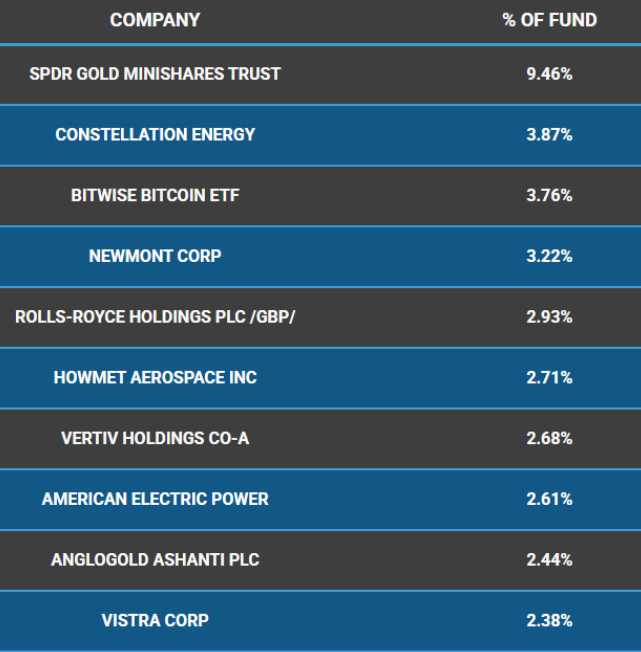
As Davi puts it, the mix of assets is a powerful one in the context of debasement. Gold, he says, delivers a store of value and inflation/debasement hedge. Bitcoin brings in compelling diversification, especially to dollar risk. Energy stocks capture the opportunity tied to energy transition and the electrification theme, which are part of a broader bet on infrastructure. Industrials are key, too. Those are all areas of the market that have done well and should continue to do well in reflationary environments.
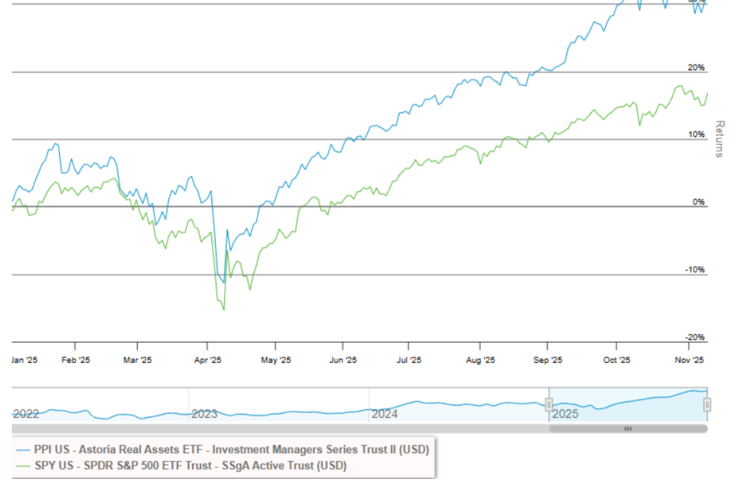
As of November 11, PPI was delivering more than 2x the results of the S&P 500 so far in 2025, up more than 31% this year.
YTD Performance Chart: Astoria Real Assets ETF (PPI) vs. SPDR S&P 500 ETF (SPY)
The Case for Multi-Asset Approaches
PPI is one of several ETFs in the market today that deliver on the debasement theme. The fund launched in 2021, but there are other strategies that also go beyond a single asset, including inflation-linked securities, to deliver results.
The SPDR SSgA Multi-Asset Real Return ETF (RLY ) is one of them. The fund owns commodities, real estate, and TIPS, in a basket that’s up about 16% this year. The VanEck Real Assets ETF (RAAX ) is another, investing in commodities, natural resource equities, REITs, infrastructure, MLPs, gold, and gold miners primarily through other ETFs. The 3EDGE Dynamic Hard Assets ETF (EDGH ) blends hard physical assets, commodities future, and inflation-linked securities like TIPS. And so the list goes.
There are many ways to position for the debasement trade, and a multi-asset approach is one of them. It offers a unique mix of inflation hedging, dollar-risk management, and asset diversification in one wrapper.
To explore ETF ideas for this theme, check out ETF Trends.

